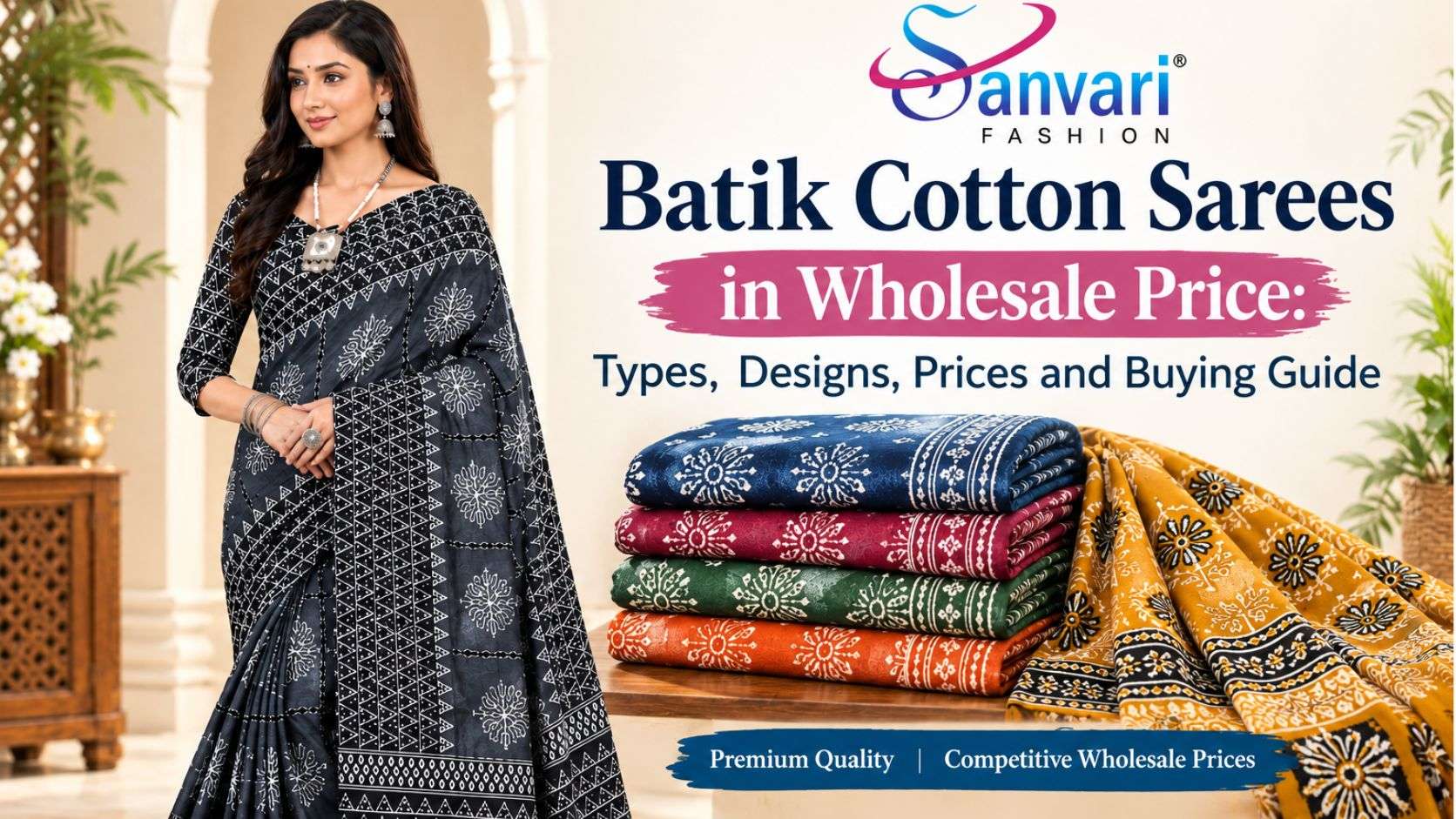
Cotton sarees continue to be a dependable category for retailers because they combine comfort, easy styling and broad customer appeal. Batik printing adds artistic character through wax-resist patterns, bold motifs and handcrafted-looking colour combinations. For a retailer, choosing the right collection means checking fabric feel, print quality, colour fastness, blouse piece, finishing, minimum order quantity and landed cost before placing a bulk order.
Batik cotton sarees in wholesale price can suit boutiques, saree shops, online sellers and resellers looking for distinctive everyday collections. Common questions include: What makes batik cotton different from regular printed cotton? Which designs are easier to sell? How should a retailer compare wholesale prices? What should be checked before buying a bulk lot?
Batik-inspired cotton sarees are valued for their visual individuality. Traditional batik techniques use wax-resist methods to create areas that resist dye, while commercial collections may combine batik-style printing with modern production methods. The result can range from small floral motifs and geometric patterns to abstract, ethnic and nature-inspired layouts.
For retail buyers, cotton works well for daily wear, office wear and warm weather. Before buying, inspect fabric density, print alignment, border finishing and blouse material rather than judging only from catalogue photographs. For retailers specifically comparing batik cotton sarees in wholesale price, design consistency is as important as the fabric itself.
The cotton saree wholesale market offers many fabric and design choices, so buyers should compare products on more than the quoted piece rate. Look at fabric composition, saree length, blouse-piece details, printing method, finishing, packaging and minimum order quantity. A lower unit price may not provide better value if the fabric is thin, colours vary between pieces or the design has weak retail appeal.
Retailers should also consider their customer profile when evaluating wholesale options. A store serving younger customers may prefer contemporary motifs, while a traditional boutique may need ethnic prints, handloom-inspired textures and deeper colour combinations. Ordering a small test quantity before a larger purchase can reduce inventory risk.
Madurai cotton sarees wholesale collections can appeal to buyers who want a South Indian-inspired cotton look with practical wearability. When comparing these options, focus on texture, weave appearance, border design and the overall balance between traditional styling and current colour trends.
Retailers can place these styles beside batik-inspired cotton sarees to create a broader cotton section. Mixing regional-looking designs with contemporary prints helps a shop serve customers searching for both classic and modern choices without making the collection feel repetitive.
Fancy cotton sarees wholesale selections are useful when a retailer wants cotton comfort with more decorative detailing. These may include richer borders, artistic prints, contrast pallu treatments, textured fabrics or subtle embellishments. The right collection can bridge the gap between simple daily-wear sarees and occasion-oriented products.
When sourcing these decorative cotton styles, check whether the additional design elements are durable and consistent across the catalogue. Retail pricing should account for fabric, finishing, packaging, shipping and expected margin. Avoid choosing a design only because it looks striking in a single photograph; repeat purchase potential is more important for a sustainable wholesale assortment.
Cotton handloom sarees wholesale collections attract customers who appreciate traditional weaving, texture and craft-led styling. Buyers should verify whether a product is genuinely handloom, handloom-inspired or powerloom-produced because these terms describe different production methods and price points.
A practical buying checklist includes fabric feel, weaving consistency, selvedge, colour variation, border alignment, shrinkage expectations and care instructions. These handloom-inspired collections can work particularly well in boutiques that position their ranges around natural fabrics, regional aesthetics and slow-fashion-inspired purchasing.
Wholesale pricing varies with fabric quality, production method, print complexity, blouse piece, finishing, order quantity and supplier terms. Calculate landed cost by considering product price, applicable GST, shipping and packaging. Then set retail pricing according to local competition, design value and required margin.
For buyers comparing batik collections, this approach helps turn a catalogue search into a practical inventory decision. Check batik cotton sarees in wholesale price against your target margin before finalizing quantities.
A profitable assortment needs variety rather than dozens of similar designs. Mix neutrals, pastels, earthy shades and brighter colours with floral, geometric, abstract and traditional motifs. This gives customers more choice while keeping the inventory focused.
Retailers can also add complementary cotton products. A carefully selected wholesale dress materials collection can serve shoppers who prefer stitched or customized ethnic outfits and create a natural cross-selling opportunity.
Online wholesale sourcing helps retailers compare catalogues without visiting multiple markets. Buyers can review fabric categories, photographs, minimum order quantities and catalogue availability before placing an order. A specialist wholesale clothing website can make the sourcing process more convenient for retailers, boutiques and online resellers.
Always verify current stock, MOQ, shipping terms and final billing because prices and availability can change. A smaller first order can also help test a new supplier before scaling.
Indian clothing stores in Surat operate in a major textile-sourcing environment, making the city relevant for retailers searching for variety and competitive wholesale supply. Buyers can compare cotton sarees with other categories and build a catalogue suited to their customer base.
For businesses studying Surat's retail landscape, online sourcing can reduce the need for repeated market visits. It also makes it easier to compare product categories, photographs and wholesale terms before deciding what to add to inventory. Retailers researching Indian clothing stores in Surat should focus on supplier reliability, product variety and the ability to maintain consistent stock.
A strong ethnic-fashion business can add coordinated categories without losing focus. For boutiques expanding into contemporary clothing, western wear collections can complement a traditional saree section and create a broader women's fashion assortment.
Retailers can also explore related ethnic categories when customers are shopping for festive or occasion wear. The goal is to create a connected product range rather than adding unrelated inventory.
Before ordering, confirm fabric composition, saree length, blouse-piece inclusion, print or weave details, colour availability, MOQ, packaging, dispatch timeline, shipping charges and return or defect policies. Ask for actual product photographs when catalogue images do not provide enough detail.
Calculate the expected selling price before confirming quantity. If a design leaves little room after business expenses, reconsider the order. A strong wholesale purchase should balance quality, design appeal, demand potential and workable margins. Check batik cotton sarees in wholesale price against your target margin before finalizing quantities.
For retailers and resellers, cotton sarees remain a practical category because they can cover everyday, office, traditional and contemporary customer requirements. Batik patterns add visual variety, while related cotton categories can help create a stronger overall catalogue.
Whether you operate a boutique, physical saree store or online fashion business, compare fabric quality, design appeal, MOQ, landed cost and expected retail demand before making a bulk purchase. A carefully planned assortment can reduce slow-moving stock and provide customers with more useful choices.
Ready to expand your saree collection? Explore wholesale cotton saree options, compare designs and select products according to your customers, budget and expected margins. Start with a manageable quantity, monitor customer response and gradually increase the styles that perform well. sanvarifashion can be part of your sourcing research when comparing wholesale fashion products for your retail or resale business.

