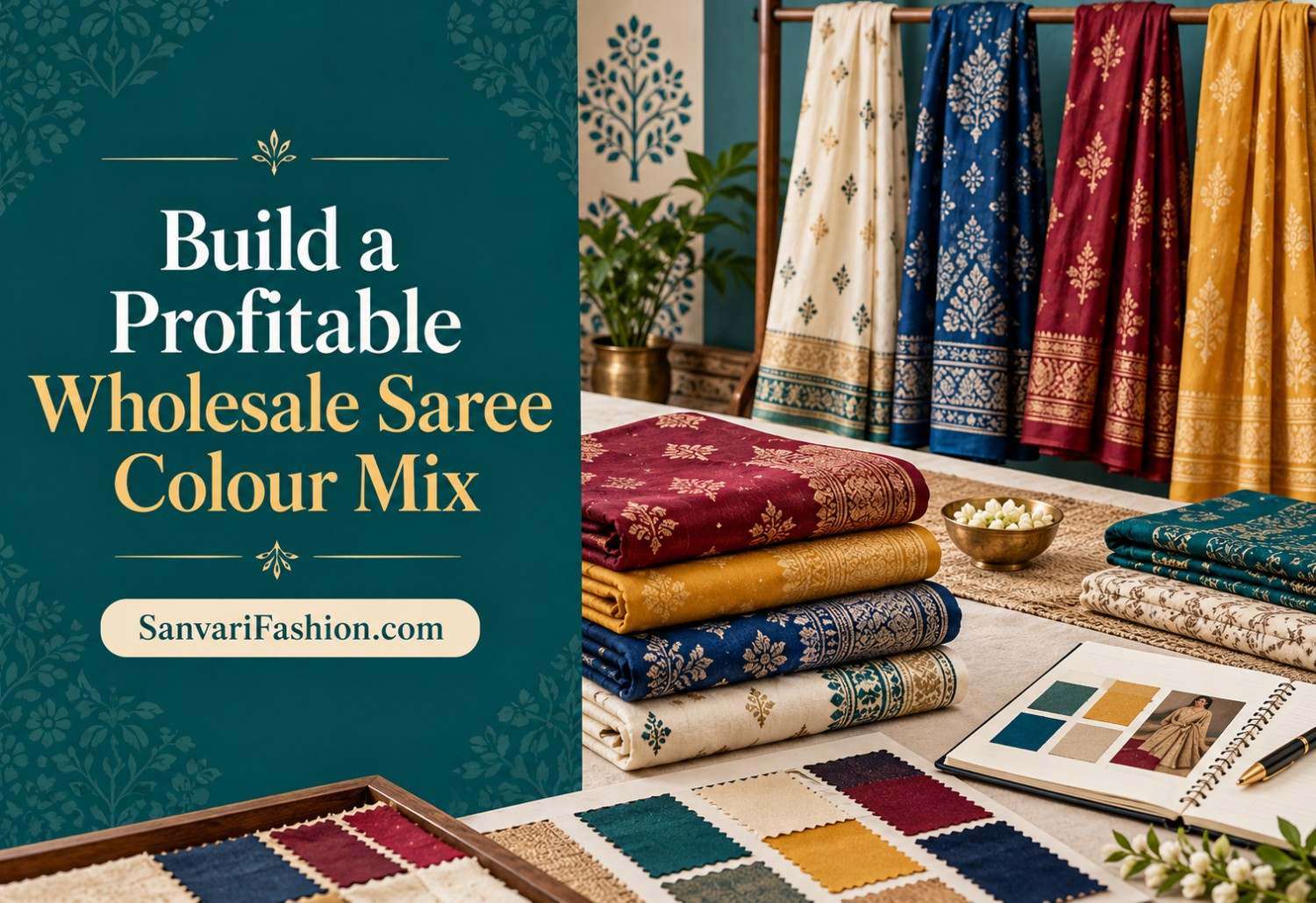
Colour is often the first thing a saree customer notices. Before checking fabric, border or price, they usually react to the shade. For boutique owners, this makes colour planning an important part of buying wholesale sarees.
A collection with only personal favourite colours can become difficult to sell. On the other hand, a collection with too many safe shades may look repetitive and fail to attract attention online. The goal is to create a balanced wholesale saree colour mix that includes dependable customer favourites, occasion-ready colours and selected new shades.
This guide explains how boutique owners can choose saree colours more strategically and build stock that is easier to market.
Colour demand is connected to the people you serve. A boutique focused on office and daily wear may need a different palette from one that sells festive or wedding sarees.
Think about your regular customer:
Your existing sales history is more useful than a general trend. Start by identifying the colour families that already perform well for your customers.
Core colours give a saree collection reliability. They are easy for customers to wear repeatedly and can work across different fabric types.
Useful core shades include:
These colours do not need to dominate every purchase, but they provide a strong base. A navy printed cotton saree, maroon festive saree and cream handloom-inspired style can attract different types of buyers without making the collection feel random.
Festive and wedding shopping often creates demand for richer tones. These colours can make your catalogue feel celebratory and may work particularly well with zari borders, embroidery, woven patterns or decorative pallus.
Consider selected quantities in:
The exact quantity should depend on your local market and customer base. A festive colour can generate attention, but holding too many pieces in one bold shade may block your budget.
Soft, muted colours can appeal to customers looking for daytime functions, office dressing, lightweight festive wear or contemporary styling.
You can add:
These shades often work well in printed, linen-look, cotton, organza-inspired or lighter saree categories. Use clear product photos because soft colours can look different under strong lighting.
The same colour may perform differently depending on the fabric and purpose of the saree.
Practical colours such as indigo, navy, maroon, green, brown and muted prints can be useful for repeat wear.
Choose clean neutrals, blue tones, soft pastels, grey, beige and small-print designs that feel polished but not overly festive.
Use deeper colours, contrast borders, jewel tones and selected bright shades. Customers may expect more visual richness in these categories.
Focus on traditional reds, greens, wine, royal blue, gold tones and premium-looking colour combinations.
Planning by category prevents you from buying the same shade range for every type of saree.
A colour story is a small group of shades that look good together in a catalogue, rack or social-media post. It helps customers browse and helps your collection appear more intentional.
Examples include:
You do not need to name every collection publicly, but these groups can help you buy and market more clearly.
A practical buying method is to keep most of your budget in colours that already sell, while reserving a smaller portion for new or experimental shades.
For instance, you may use:
This balance protects your working capital while still giving customers something fresh to discover.
Boutique buyers using SanvariFashion.com can compare designs by colour family, fabric and occasion rather than choosing every saree only by its catalogue image.
Before placing a larger saree order, ask yourself:
These questions slow down impulse buying and help create a more useful collection.
Customers often tell you what they want without you needing formal market research. Keep notes on messages such as:
Track recurring requests in a notebook or simple spreadsheet. Over time, you will see which shades deserve deeper reorders.
When selling sarees online, colour accuracy matters. Use a combination of images and video to help customers understand the product.
Show:
Avoid extreme editing that changes the colour too much. Honest presentation reduces disappointment and builds repeat trust.
Avoid:
A planned mix creates more choice for customers and more control for your boutique.
Which saree colours sell well for boutiques?
Demand varies, but navy, maroon, green, black, cream, mustard, indigo and selected festive shades are commonly useful starting points.
Should I stock pastel sarees?
Yes, in controlled quantities. Pastels can suit daytime events, office wear and modern customers, especially in lighter fabrics.
How many colours should I buy in one saree design?
Start with a selected mix rather than every available colour. Reorder based on genuine customer demand.
How can I know which colour my customers prefer?
Track enquiries, sales, repeat orders, live-sale comments and requests received on WhatsApp or social media.
Are bright sarees risky to stock?
Not necessarily. Bright shades can sell well for festivals and weddings, but they are best bought with a clear occasion and customer in mind.
A profitable saree collection is not about stocking every colour—it is about selecting the right mix for your buyers, occasions and budget. Explore wholesale saree options at SanvariFashion.com and build a colour story your boutique customers will love to wear.

