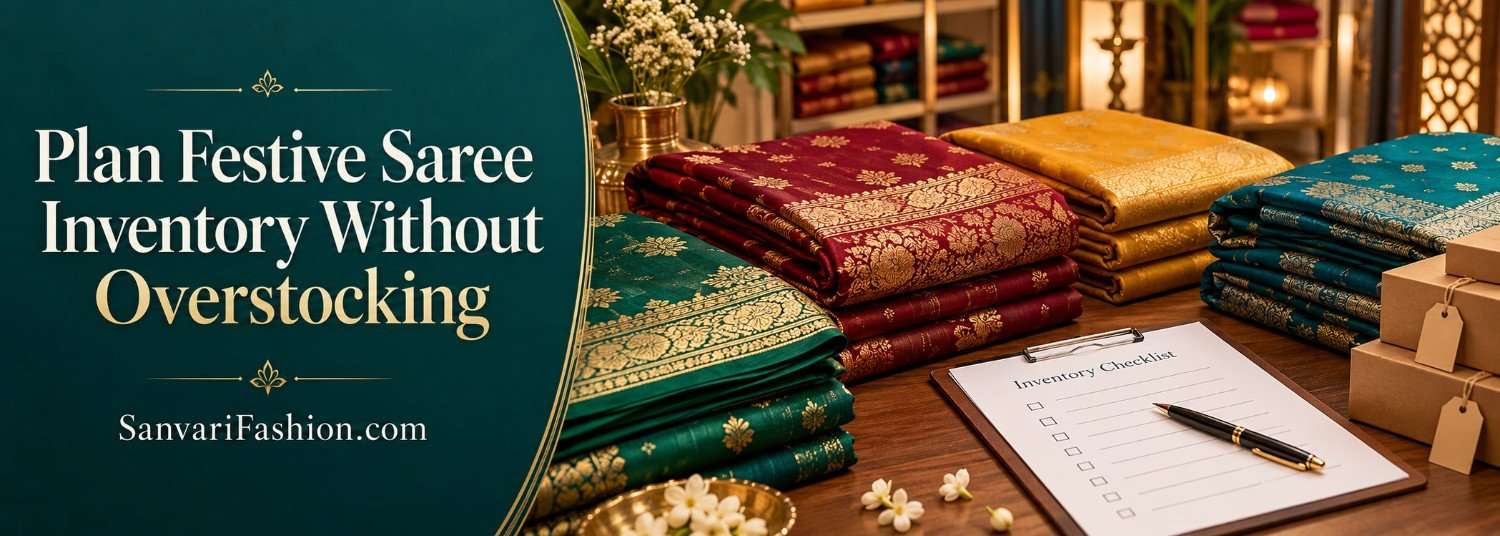
Festive saree collections can bring valuable sales opportunities, but they also create inventory risk. Retailers often feel pressure to offer many colours, fabrics and price ranges before the season begins. If purchasing is based only on excitement or supplier catalogues, unsold festive stock can remain blocked for months.
Effective festive saree inventory planning balances variety with control. The retailer should offer enough choice to attract customers without investing too heavily in untested designs.
This guide explains how boutique owners, resellers and retail stores can plan festive saree stock, protect cash flow and improve their chances of timely sell-through.
Not every festive shopper is looking for a bridal saree or expensive traditional weave. Customers may need sarees for:
Each occasion can require a different price, weight and level of embellishment.
Before buying, identify your strongest customer groups. A store serving working women may perform well with lightweight, polished sarees. A boutique serving wedding shoppers may need richer borders and occasion-focused presentation.
Previous sales provide better guidance than assumptions. Review:
Do not look only at total revenue. A category may have generated high revenue while also leaving expensive unsold stock.
Calculate how many pieces were purchased, sold at full price, sold at a discount and carried forward. This gives you a more realistic view of performance.
Customers enter a festive collection with different budgets. Instead of buying randomly, allocate stock across defined price bands.
A practical structure might include:
These sarees can serve budget-conscious shoppers, gifting customers and buyers who need multiple outfits.
Look for:
This is often the broadest segment for festive shoppers seeking better finishing without entering a premium price level.
Possible features include:
Premium pieces can attract customers buying for major functions or important gifts. Keep this selection focused unless your store has proven premium demand.
Buy premium depth only in designs and price points supported by past sales.
A festive collection should not be built around a single fabric unless your shop specialises in it.
Depending on your customer base, you may consider:
The mix should consider local weather and comfort. A visually rich but very heavy saree may receive attention in the shop yet lose the sale if the customer finds it difficult to carry.
Festive customers often seek colour, but stocking only bright red, maroon and green can make the collection repetitive.
Divide colours into groups:
Buy greater depth in proven colours and smaller quantities in experimental shades. This creates variety without exposing too much capital to uncertain choices.
Buying too early can lock cash in stock. Buying too late can lead to limited options, delayed dispatch or missed promotional time.
Work backward from your planned launch date:
The collection should ideally be ready before customer demand peaks. This gives you time to observe early response and make controlled repeat purchases.
Instead of buying a large quantity of every design, begin with more variety and limited depth.
Track:
Reorder only when interest converts into genuine demand. Likes and compliments alone are not enough to justify a large purchase.
When reviewing collections through SanvariFashion.com, retailers should evaluate whether a design fills a real gap in their assortment rather than adding another similar option.
Customers often find it easier to buy when they can imagine the final look. Present festive sarees with suitable blouse ideas, jewellery suggestions and occasion-based styling.
You can create edits such as:
These themes make marketing more focused and help customers navigate the collection.
Do not claim that accessories or blouse pieces are included unless they genuinely are. Clearly state all product components.
One major inventory mistake is using the entire festive budget in the first purchase. Reserve part of the budget for:
A smaller initial buy with reorder capacity is often safer than a large fixed collection that cannot adapt to customer response.
Not every festive design will sell immediately. Decide what you will do with slower stock before the season ends.
Options include:
Avoid panic discounting too early. A well-presented festive saree may still sell for another celebration or family function.
After the season, record:
This review turns one season’s experience into a better plan for the next one.
Work backward from your launch date and include supplier dispatch, quality checks, photography and marketing time. Avoid buying so early that cash remains blocked unnecessarily.
There is no fixed number. Begin with enough variety to test customer interest, but keep the quantity per untested design controlled.
Demand varies by market. Traditional colours often remain relevant, but neutral and contemporary shades can expand the collection. Use your own sales history as the main guide.
Use limited initial quantities, track actual enquiries and sales, reorder winners and choose versatile pieces that can also be sold for weddings or parties.
Only when previous sales demonstrate reliable premium demand. Otherwise, keep a carefully selected premium assortment with lower quantity.
Festive success depends on disciplined buying, timely presentation and quick learning from customer response. Explore wholesale saree options at SanvariFashion.com and build a festive collection with the right balance of variety, price and inventory control.

