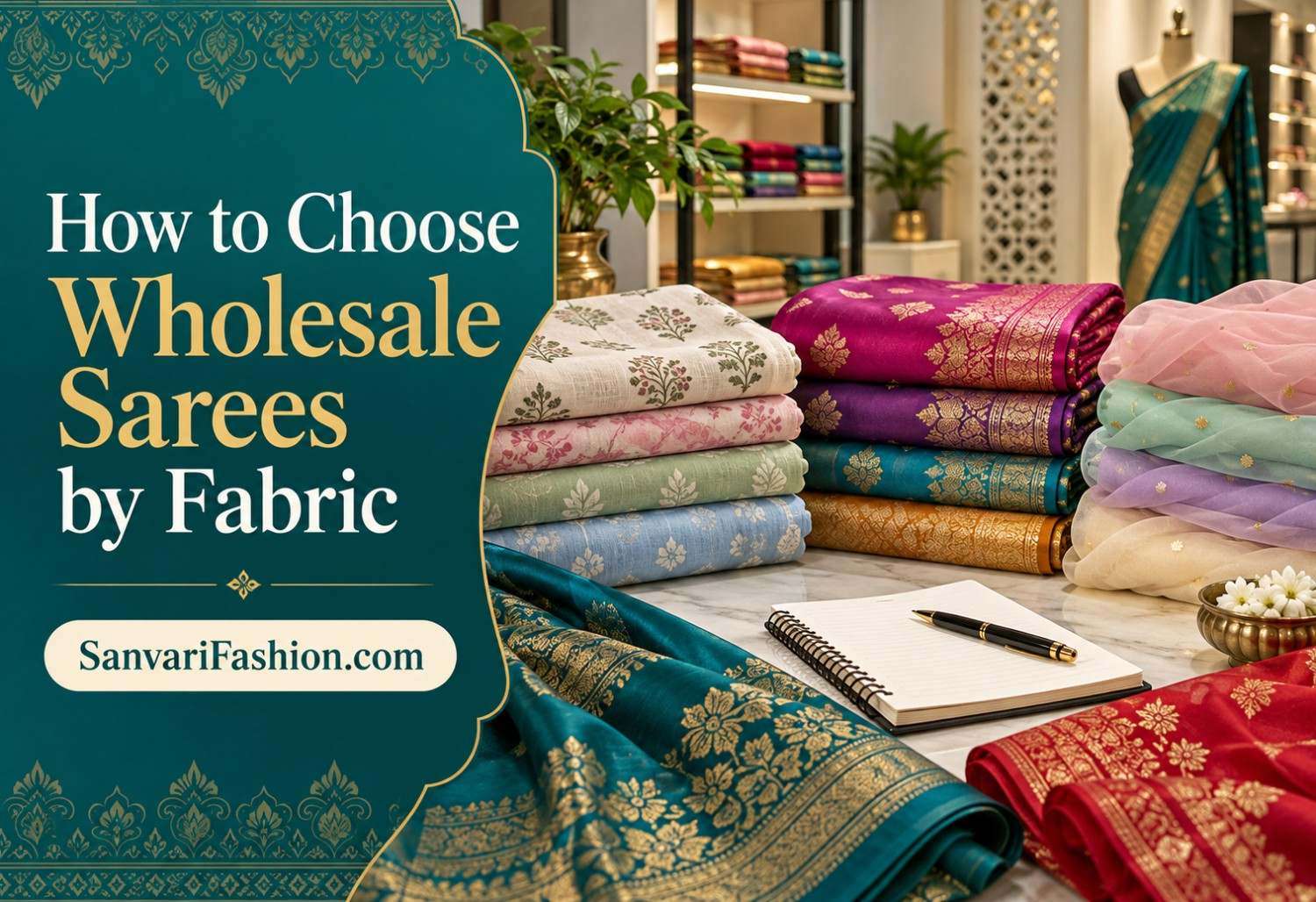
Fabric is one of the most important factors in a saree purchase. It influences how the saree drapes, how comfortable it feels, which occasions it suits, the selling price and the customer’s overall satisfaction.
For boutique buyers, fabric selection should be based on more than what looks attractive in a catalogue. A saree may have a beautiful border or colour but still be difficult to sell if the fabric does not match customer expectations.
A balanced wholesale saree collection usually includes fabrics for everyday wear, workwear, festive events and premium occasions. This guide will help you choose wholesale sarees by fabric with a more practical buying approach.
Before choosing a fabric, ask how your customer plans to wear the saree.
Possible needs include:
A customer shopping for daily use may prefer breathable fabric and easy care. A customer buying for a wedding event may focus on richness, shine, border work and visual impact.
Fabric choice becomes easier when the intended use is clear.
Cotton sarees are often valued for comfort, breathability and practical wearability. They can suit daily routines, office use, summer seasons and customers who prefer understated ethnic dressing.
When buying cotton sarees, check:
Cotton can work well in block-print-inspired patterns, small florals, stripes, checks and simple woven designs. Keep colours practical, such as navy, maroon, green, mustard, indigo and soft neutrals.
Chiffon and georgette sarees can offer a light, flowing drape. They may suit parties, family functions, travel-friendly styling and customers who want a saree that feels less heavy.
Check:
These fabrics can look elegant in florals, delicate borders, ombré shades and lighter festive prints. Good product videos are useful because they show the movement of the fabric better than still images.
Silk-blend sarees can create a richer festive look while offering different price points from pure silk. They may be suitable for festivals, family celebrations, gifting and wedding functions.
Look for:
Traditional shades such as maroon, red, green, royal blue, mustard and wine can work well in this category. Keep some softer colours too for customers looking for daytime celebration wear.
Linen-look sarees and soft blended fabrics may appeal to customers who prefer minimal, comfortable and contemporary ethnic wear. They can work for office wear, casual events and lightweight daily styling.
Useful features include:
Check the exact composition before describing the saree to customers. It is always better to use honest material information than broad claims.
Boutique buyers browsing SanvariFashion.com can compare sarees by fabric suitability, customer segment and occasion instead of selecting only by design.
Organza-style sarees are often chosen for their structured, light and festive appearance. They can work well for daytime functions, engagement events, festive gatherings and customers who want a modern dressy look.
Before buying, check:
Because organza can look different under different lighting, clear photos and videos are especially important.
A boutique can serve more customers by keeping a balanced mix.
For example, you may include:
This creates variety without making the catalogue feel random. It also allows you to offer products across multiple price ranges.
Fabric type affects what customers expect to pay. A lower-priced cotton saree should still have clear details and acceptable finishing. A higher-priced festive saree should offer visible value through fabric, border, pallu, work or presentation.
Calculate price using:
Avoid using the same margin for every fabric category. A premium saree may require more selling effort and higher investment, while a fast-moving cotton saree may support regular repeat orders.
For WhatsApp, Instagram or website selling, give buyers enough information to make a decision.
Show:
Avoid using too many filters because they can alter the colour and texture. Honest visuals build customer trust.
For a new fabric type, begin with limited quantities. Track:
Your sales data will show which fabrics are right for your market.
Avoid:
Which saree fabric is best for daily wear?
Cotton and comfortable blends are often suitable for daily wear because they can be breathable and practical.
Which saree fabrics suit festive occasions?
Silk blends, organza-style fabrics, georgette and decorative woven sarees can suit festive occasions depending on the finish and design.
Are chiffon sarees good for online selling?
Yes. Short videos and clear fabric details help customers understand their drape and transparency.
How can I reduce fabric-related customer complaints?
Use accurate fabric descriptions, close-up photos, honest videos and clear information about blouse pieces and transparency.
Should a boutique stock only one fabric type?
No. A controlled mix of fabrics helps you serve customers with different needs, budgets and occasions.
The right fabric mix helps your saree collection feel practical, festive and relevant to more customers. Explore wholesale saree options at SanvariFashion.com and choose fabrics that match your boutique’s customer demand and price range.

