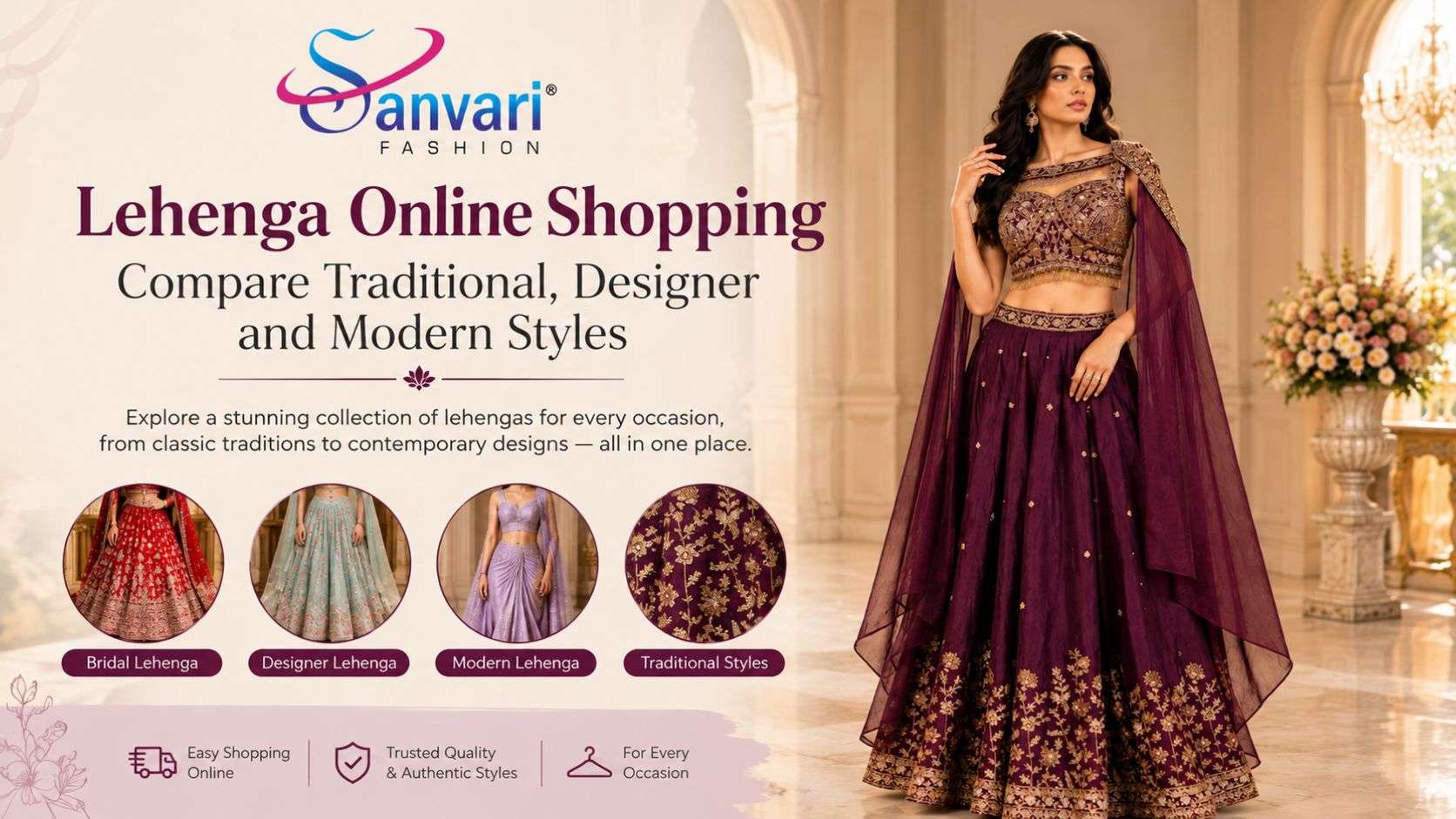
Choosing the right ethnic outfit depends on the occasion, fabric, design, comfort and budget. Lehenga online shopping gives buyers access to traditional, designer, bridal and modern collections without visiting multiple physical stores. From embroidered wedding outfits to lightweight festive styles, online catalogues make it easier to compare different silhouettes and embellishments before making a purchase.
When comparing lehengas online, buyers should check the fabric, stitching status, blouse style, skirt flare, dupatta details, embellishment, available sizes and return conditions. Are you looking for a bridal outfit or a lighter festive design? Do you prefer a ready-to-wear option or a semi-stitched set? What fabric works best for your event? These are some of the most common questions buyers ask before selecting a lehenga.
A bridal lehenga online collection is generally designed for weddings and major ceremonial occasions. Bridal styles often feature detailed embroidery, zari, sequins, stones, thread work or other decorative elements. Rich fabrics such as silk blends, velvet, jacquard and premium net can create a more luxurious appearance.
When choosing a bridal lehenga online, pay attention to the overall weight of the outfit. A heavily embellished lehenga may look impressive but can be less comfortable for long functions. Consider the wedding venue, season and duration of wear before selecting the final outfit.
For retailers and resellers, bridal collections can also form an important premium segment. Sanvari Fashion's wholesale lehenga catalogue includes bridal and wedding-focused collections with different fabrics, designs and minimum-order quantities.
A ready to wear lehenga choli is convenient for customers who want an outfit requiring little or no additional tailoring. It can be particularly useful for parties, festive celebrations, receptions and other occasions where quick styling is important.
The major advantage of a ready to wear lehenga choli is convenience. However, buyers should still check measurements carefully. Waist size, blouse fitting, skirt length and closure type can affect comfort and appearance. If the product is semi-stitched rather than fully stitched, the buyer may need some tailoring before wearing it.
For online sellers, ready-to-wear and semi-stitched options can be offered alongside traditional collections to serve customers with different preferences.
Modern lehenga choli designs combine traditional craftsmanship with contemporary colours, silhouettes and styling. Classic embroidered lehengas remain popular for weddings, while lighter printed, sequined and fusion styles can work for festivals and social occasions.
The choice of lehenga choli designs should depend on the event. Heavy embroidery may suit bridal functions, while minimal embellishment can be more practical for smaller celebrations. Colour is another important consideration. Red, maroon, pink, green, wine, peach, pastel and metallic shades can create very different visual effects.
Online wholesale catalogues can help retailers compare several styles before selecting stock. Sanvari Fashion's current wholesale collection includes options described with fabrics such as soft net, jacquard, georgette and dola silk.
A lehenga choli online sale can be useful for shoppers looking for seasonal offers or discounted collections. However, price should not be the only consideration. Buyers should compare the original product details, fabric, stitching, embellishment and applicable delivery or return terms.
During a lehenga choli online sale, check whether the product is fully stitched, semi-stitched or unstitched. Also confirm whether the blouse and dupatta are included and whether the displayed price applies to one piece or a catalogue/bulk quantity.
For retailers, promotional pricing can provide an opportunity to test new designs, but inventory should still be selected according to customer demand and available investment.
Traditional lehengas usually focus on heritage-inspired colours, embroidery and classic silhouettes. They can include zari work, traditional motifs, rich fabrics and coordinated dupattas.
Designer styles may introduce modern cuts, unusual colour combinations, contemporary embroidery placements and lighter silhouettes. Some collections combine ethnic detailing with fashion-forward styling, making them suitable for customers who want a modern appearance while retaining traditional elements.
Before purchasing, consider the occasion. A traditional style can work well for cultural ceremonies, while a contemporary designer outfit may suit receptions, parties and fashion-oriented events.
Fabric affects the fall, comfort, appearance and overall weight of a lehenga. Buyers should understand the basic characteristics of commonly used materials.
Silk and silk blends: Suitable for festive and wedding collections because of their rich appearance.
Georgette: Lightweight and flowy, making it useful for party and occasion wear.
Jacquard: Known for woven patterns and a structured appearance.
Net: Frequently used for layered and embellished designs.
Velvet: Often selected for richer winter or evening styles.
The right fabric depends on the season, occasion and desired silhouette. Buyers should also look at the product description for exact fabric information instead of relying only on photographs.
A simple comparison checklist can make online purchasing easier:
Check the fabric and lining.
Confirm whether the set is stitched or semi-stitched.
Review the blouse measurements.
Check skirt length and flare.
Examine embroidery and embellishment details.
Confirm dupatta fabric and dimensions.
Compare the price with similar products.
Review minimum-order requirements if purchasing wholesale.
Check shipping and return conditions.
Order according to your customer's preferences if you are a reseller.
For wholesale buyers, catalogue variety is especially important. Sanvari Fashion currently lists multiple lehenga collections with different minimum quantities, allowing retailers to consider different inventory requirements.
Indian clothing stores in Surat have access to a large textile ecosystem covering ethnic wear, fabrics and fashion products. Surat is particularly important for retailers searching for wholesale clothing collections and regularly updated catalogues.
For buyers researching Indian clothing stores in Surat, online wholesale platforms can make product discovery more convenient. Instead of visiting several suppliers, retailers can review collections digitally and shortlist products based on design, fabric, price segment and minimum order quantity.
This approach can be useful for boutiques, resellers and online clothing businesses that want to expand their ethnic-wear assortment.
Retailers should avoid stocking only one type of lehenga. A balanced assortment can include bridal, festive, partywear, traditional and modern options.
For example, bridal pieces can target customers preparing for weddings, while lighter designs can appeal to festival and party shoppers. Semi-stitched products may offer flexibility for customers who prefer customised fitting.
It is also useful to combine lehengas with complementary women's fashion categories. Customers shopping for ethnic outfits may also be interested in coordinated dress materials, kurtis and other occasion-wear products.
For retailers who want to expand beyond lehengas, wholesale dress materials can provide an additional category for customers looking for unstitched and semi-stitched ethnic outfits. Sanvari Fashion currently features cotton, printed, embroidered, designer and Pakistani-inspired dress-material collections.
Modern ethnic fashion increasingly combines traditional elements with contemporary styling. Shorter blouses, lighter fabrics, pastel colours, unusual borders and minimal embellishment can create a more contemporary look.
Retailers can also consider fusion products for customers who prefer fashion that moves between ethnic and modern wardrobes. A carefully selected combination of ethnic and western-inspired products can help a store serve different customer preferences.
For businesses expanding into contemporary fashion, western wear collections can complement traditional products and provide another category for customers seeking modern outfits.
Wholesale sourcing allows retailers to compare products before committing to inventory. Instead of selecting garments from a single design range, buyers can evaluate multiple catalogues and price segments.
Online sourcing can also reduce the need for repeated market visits. Retailers can review product photographs, specifications and catalogue information before contacting a supplier.
Sanvari Fashion provides wholesale lehenga collections for retailers, resellers and distributors, with current listings showing different fabrics, designs and minimum-order quantities.
The key is to purchase according to market demand rather than simply choosing the most heavily decorated product. Retailers should consider local preferences, seasonal demand, customer budgets and previous sales.
Successful lehenga online shopping requires more than selecting an attractive photograph. Always read the complete product information and compare the outfit with your intended use.
For wedding customers, prioritise fabric, embellishment, fitting and overall comfort. For festive shoppers, lighter designs may provide more practical options. For resellers, consider catalogue variety, minimum order quantities and potential customer demand.
Photographs can sometimes make colours appear different depending on lighting and screen settings, so buyers should review product descriptions carefully and ask the supplier for clarification when necessary.
A reliable wholesale supplier should provide clear product information, transparent ordering conditions and accessible customer support. Retailers should understand the minimum quantity, available sizes, stitching status, dispatch process and return policy before placing an order.
Current Sanvari Fashion listings show product-level details such as MOQ, fabric and stitching type, which can help wholesale buyers evaluate collections before ordering.
The supplier's range also matters. A business that offers multiple related ethnic-wear categories can make it easier for retailers to develop a broader product assortment.
Before placing your order, ask:
Is the fabric suitable for the occasion?
Is the lehenga stitched or semi-stitched?
Does the blouse require alteration?
Is the dupatta included?
Are the measurements clearly mentioned?
Does the embellishment match the expected quality?
Is the price appropriate for your target customer?
If buying wholesale, does the MOQ suit your budget?
Are shipping and return conditions clear?
Following this checklist can reduce purchasing mistakes and help buyers select outfits that match both style and practical requirements.
1. What should I check before buying a lehenga online?
Check fabric, measurements, stitching status, embellishment, included components, price, shipping and return conditions.
2. Is a ready-to-wear lehenga better for quick occasions?
It can be convenient because it generally requires less tailoring, but buyers should still confirm measurements and fitting details.
3. How do I choose a bridal lehenga?
Consider the wedding style, season, fabric weight, embroidery, comfort, colour and required fitting before ordering.
4. Can retailers buy lehengas wholesale online?
Yes. Retailers can compare online catalogues, minimum quantities, fabrics and designs before selecting collections suitable for their customers.
If you are a retailer, reseller, boutique owner or online fashion seller, now is a good time to compare traditional, bridal, designer and contemporary collections according to your target market.
Explore the latest lehenga wholesale collections from Sanvari Fashion, compare available styles and select products that fit your customer's occasion, budget and fashion preferences. The current catalogue includes multiple lehenga choli options and different minimum-order quantities.
Browse the collection, compare designs and start sourcing your next ethnic-wear range today.

