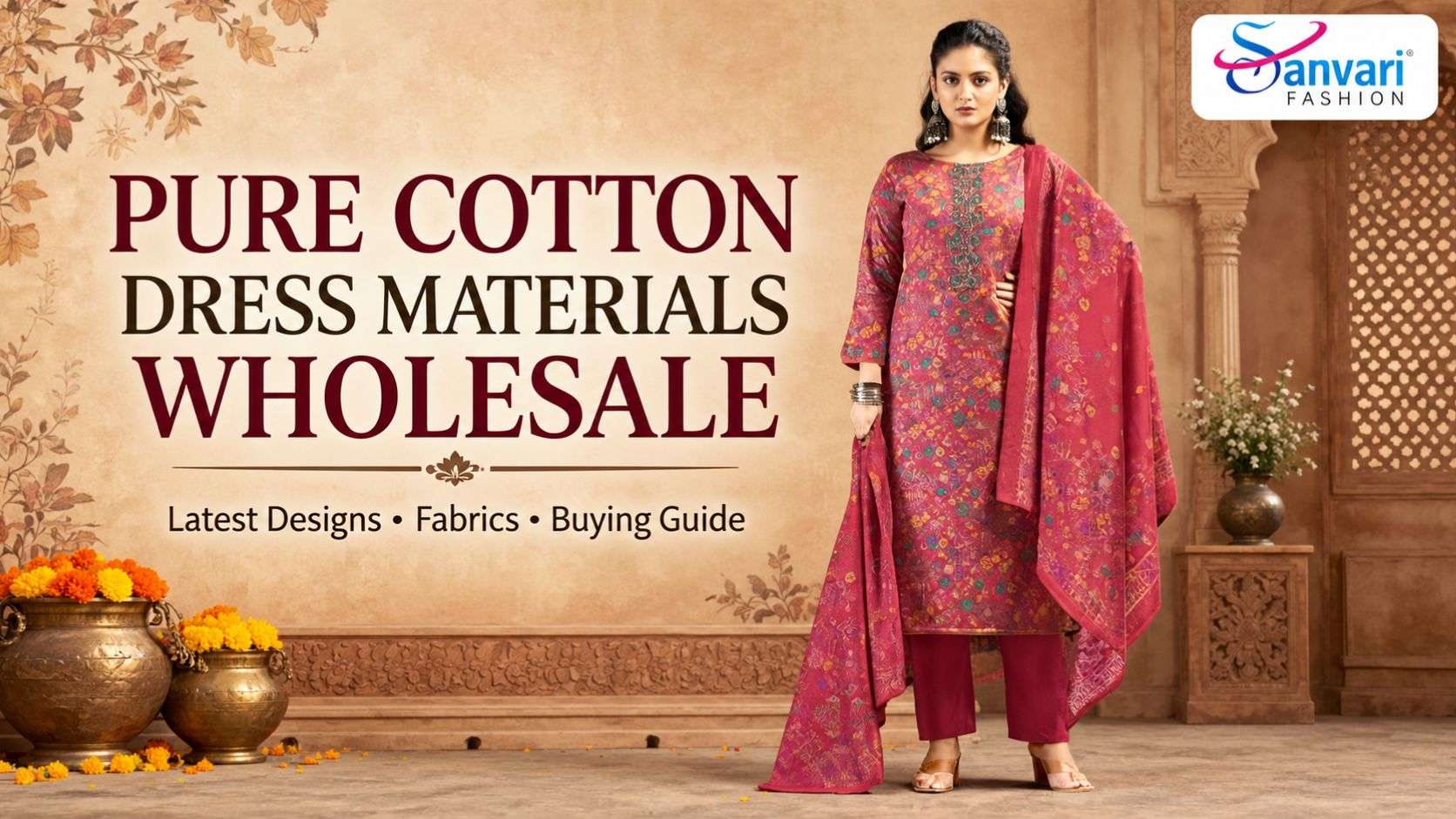
The demand for comfortable, stylish, and breathable ethnic wear continues to create opportunities for retailers and resellers across India. Pure cotton dress materials wholesale is a valuable category for businesses looking to offer everyday salwar suits, office wear, casual outfits, and traditional clothing. Cotton fabrics are popular because they feel comfortable in warm weather and come in a wide range of prints, colours, and designs. Retailers can build an attractive collection by selecting quality fabrics, fashionable patterns, and suitable price ranges for their customers.
Whether you run a boutique, clothing store, or online reselling business, choosing the right dress materials can help you serve different customer preferences. Are printed cotton sets suitable for everyday wear? Which designs attract boutique customers? How can retailers balance fabric quality with wholesale costs? The right purchasing strategy can help answer these questions while supporting better inventory planning and customer satisfaction.
Today's customers want clothing that combines comfort with attractive styling. Floral prints, geometric patterns, traditional motifs, pastel shades, and contemporary colour combinations are popular choices for cotton dress materials. Retailers can offer a mix of everyday designs and premium-looking outfits to appeal to different age groups and budgets.
Pure cotton dress materials wholesale collections can include three-piece sets with a top, bottom, and dupatta. Depending on the design, the sets may feature printed cotton, solid colours, woven patterns, decorative borders, or embroidered details. Buying a balanced mix of these styles can help retailers refresh their collections throughout the year.
Embroidered dress material wholesale collections are suitable for customers who prefer elegant ethnic outfits for festivals, family gatherings, office events, and small celebrations. Designs may feature floral embroidery, threadwork, neckline embellishments, or decorative sleeves. Cotton bases with subtle embroidery offer a balance between everyday comfort and a refined appearance.
Retailers should check the stitching details, embroidery finishing, fabric thickness, and colour consistency before placing large orders. Offering both minimal embroidery and more elaborate designs helps attract customers with different style preferences. Compare samples and confirm the available sizes of fabric pieces before purchasing in bulk.
Lawn cotton dress material wholesale is a popular option for summer collections because lightweight lawn fabric is generally breathable and comfortable. It is often available in floral prints, digital-inspired patterns, delicate motifs, and vibrant seasonal colours.
When sourcing lawn cotton, check the fabric composition, weave, opacity, and colourfastness. The term “lawn cotton” describes a lightweight cotton fabric, but the actual quality can differ between suppliers. Retailers should verify the material specifications rather than relying on product photographs alone.
Pakistani dress material wholesale collections often feature long shirt designs, coordinated trousers, printed dupattas, elegant necklines, and intricate patterns. Depending on the collection, retailers may find floral prints, traditional motifs, embroidered panels, and sophisticated colour combinations.
These styles can appeal to customers looking for graceful ethnic outfits for festive occasions and everyday use. When comparing suppliers, check the length of each fabric piece, the dupatta material, the design placement, and whether the set includes all advertised components.
Unstitched dress material wholesale gives customers the flexibility to choose their preferred fit, sleeve length, neckline, and overall outfit design. It is also useful for retailers serving customers who prefer tailoring their clothes rather than purchasing ready-made garments.
Before ordering, verify the measurements of the top, bottom, and dupatta separately. Clear product descriptions help prevent misunderstandings about fabric quantities and included accessories. Retailers can also offer tailoring recommendations to improve the customer experience.
The cost of cotton dress materials depends on fabric quality, printing techniques, embroidery, set components, order quantity, and supplier terms. Basic printed sets may fall into a different price category from premium embroidered or designer-inspired collections. Instead of choosing a supplier solely because of a low quoted price, retailers should compare the complete product specifications.
For pure cotton dress materials wholesale, request current quotations, minimum order quantities, bulk discounts, shipping charges, and applicable return policies. Ask whether the quoted price includes the dupatta and bottom fabric. Sample orders can help you assess fabric feel, stitching or finishing where applicable, colour accuracy, and overall value before committing to larger quantities.
A useful purchasing checklist includes:
Confirming the fabric composition and measurements.
Checking print quality and colour consistency.
Comparing the total cost, including shipping.
Reviewing delivery schedules and replacement policies.
Selecting designs based on local customer demand.
Retailers can increase the variety of their stores by pairing dress materials with other complementary clothing categories. For example, customers shopping for unstitched cotton suits may also be interested in ready-to-wear ethnic outfits for occasions when they need a convenient styling option.
Explore wholesale kurtis in Surat to discover another category that can complement a retailer's ethnic wear collection. Offering both kurtis and dress materials allows businesses to serve shoppers with different preferences, from quick everyday outfits to customised stitched clothing.
Likewise, customers interested in traditional Indian clothing may appreciate coordinating dupattas, suitable accessories, and festive outfit options. A thoughtfully organised collection can make browsing easier and encourage customers to explore more of your product range.
Businesses researching indian clothing stores in Surat should consider more than the number of designs available. Fabric quality, supplier communication, consistency between batches, order fulfilment, and transparent pricing all matter when choosing where to source inventory.
Surat has a strong textile and garment trading ecosystem, making it a relevant market for retailers exploring ethnic clothing collections. Before selecting a supplier, compare product catalogues, request recent photographs or samples, and confirm the terms for repeat orders.
Retailers who want to diversify beyond dress materials can also explore other apparel categories available through men's wear collections. This can help stores serving families develop a broader clothing assortment while keeping their purchasing decisions aligned with customer demand.
A reliable supplier should provide clear product information, consistent communication, and realistic delivery commitments. Ask for current catalogue images, fabric details, available colour options, order quantities, and payment terms before placing an order.
The sanvarifashion collection can be explored by retailers looking for ethnic clothing options for their businesses. Compare the available products against your budget and customer preferences, and confirm stock and ordering details directly before finalising a purchase.
For new retailers, starting with a carefully selected range of designs may be more manageable than investing heavily in a single pattern. Track which colours, prints, and fabric types sell well, then use that information to plan future purchases. This approach helps reduce slow-moving stock and supports more informed buying decisions.
Successful sourcing involves understanding both the product and the customer. Review seasonal demand, compare supplier prices regularly, and maintain a practical mix of budget-friendly and premium-looking styles. Keep product descriptions accurate so shoppers understand the fabric type, included pieces, and care instructions.
Retailers should also explain that cotton garments may shrink or fade if improperly washed, depending on the fabric and dyeing process. Following the care instructions supplied with the product can help customers maintain their garments. Strong product knowledge builds trust and encourages repeat purchases.
Building a successful ethnic wear collection starts with choosing attractive designs, dependable quality, and pricing that suits your target market. From embroidered sets and lightweight lawn cotton to Pakistani-inspired prints and unstitched fabrics, a carefully planned selection can help retailers serve a wider range of customers.
Explore pure cotton dress materials wholesale options, compare specifications, and choose products based on genuine customer demand. With thoughtful inventory planning and reliable supplier communication, retailers and resellers can build a competitive collection for everyday and festive wear.
Ready to expand your ethnic wear collection? Visit sanvarifashion to explore available clothing categories, review product options, and find styles that suit your business requirements. Check current availability, pricing, and order conditions before purchasing.

