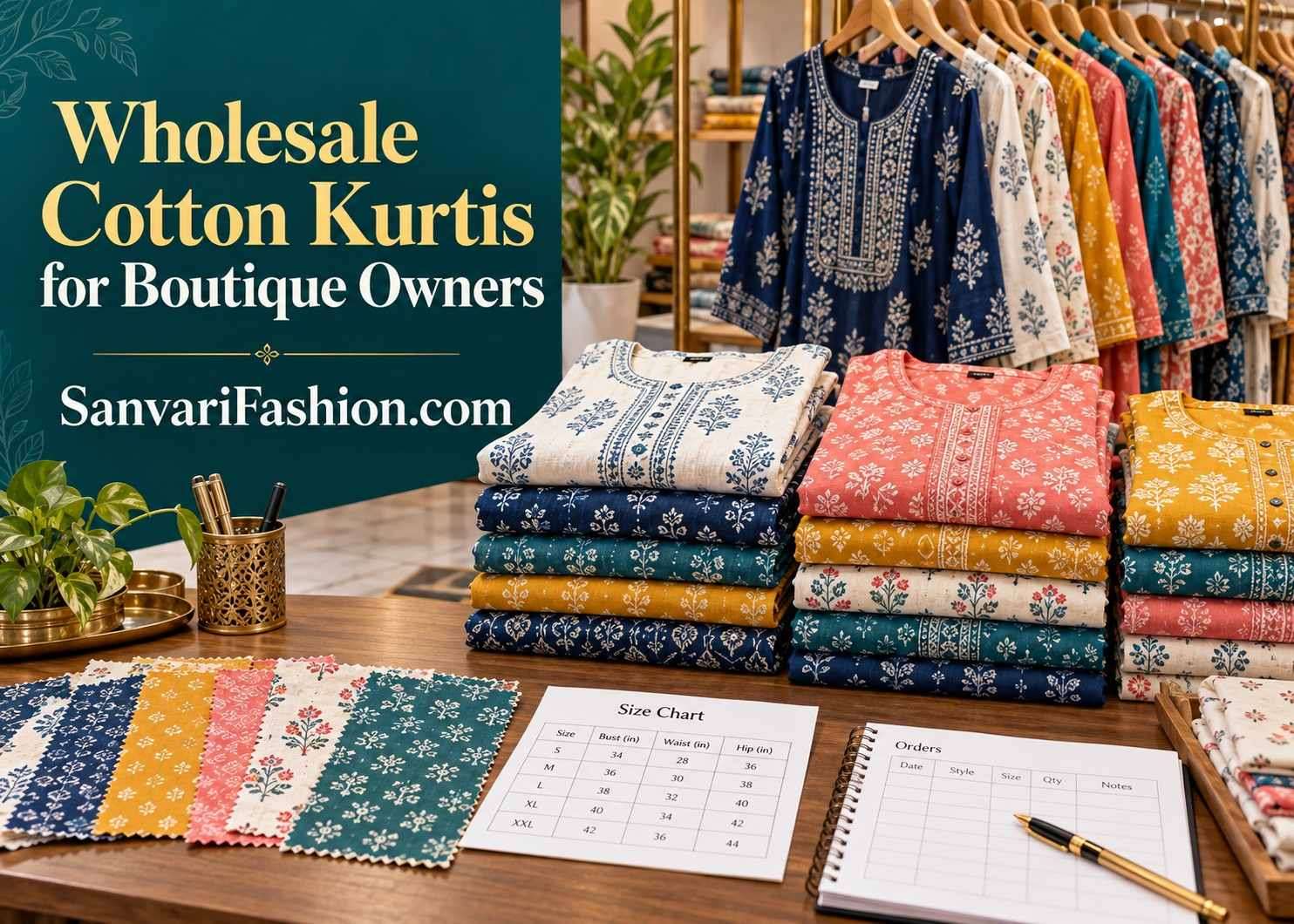
Cotton kurtis are one of the most dependable categories for boutique owners. Customers choose them for daily wear, office wear, college, travel, casual outings and warm-weather comfort. Because they are practical and easy to style, cotton kurtis can also create repeat demand when the fabric, fit and price match customer expectations.
However, not every Wholesale cotton kurtis collection will sell equally well. A profitable wholesale purchase depends on more than attractive prints. Boutique owners should consider fabric quality, silhouette, size availability, customer lifestyle, pricing and presentation before ordering.
This guide explains how to choose wholesale cotton kurtis for boutique owners with a more commercial approach.
Before selecting stock, define who will most likely buy your cotton kurtis.
Your customer may be:
A customer shopping for workwear may prefer clean prints, softer colours and simple necklines. A customer buying daily wear may choose practical darker shades and easy-care fabrics. The best collection is the one that fits your buyer’s real routine.
The word “cotton” can describe several fabric types, blends and finishes. Ask for clear product information before placing a large order.
Confirm:
A very thin cotton kurti may be comfortable but require an inner layer. A heavier cotton fabric may offer better coverage but may be less suitable for extreme heat.
Always assess fabric according to the product’s expected price and use.
A beautiful print may not sell if the fit is uncomfortable or difficult to style. Cotton kurtis are most useful when customers can wear them repeatedly.
Popular practical silhouettes include:
Straight-cut kurtis can work well for office and daily wear. A-line silhouettes may appeal to customers who prefer more room and movement. Shirt-style kurtis can suit contemporary casual looks.
Choose a mix instead of stocking every design in the same silhouette.
Size availability can decide whether an enquiry becomes a sale. Do not assume that every collection should have the same size mix.
Track your existing demand for:
Also confirm the actual measurements. One supplier’s XL may fit differently from another supplier’s XL.
For online sales, clearly mention:
At SanvariFashion.com, boutique buyers can evaluate cotton kurtis by complete product details rather than choosing only by print or colour.
Cotton kurtis are often repeat-wear products, so colour selection matters.
A balanced buying plan may include:
Do not buy too many similar shades just because one colour looks attractive in the catalogue. Include familiar colours that customers already buy and limited quantities of experimental colours.
Cotton kurti prints can go in and out of fashion, but some styles are easier to sell repeatedly.
Useful print groups include:
Avoid buying many pieces that look almost identical. Customers should see a clear difference between each design.
A boutique can serve more customers by offering multiple price points.
You may create:
Price each product based on full landed cost, not just the wholesale rate. Include transport, packaging, payment charges, content costs and your profit margin.
A low price is not always the best selling point. Customers also value fit, fabric comfort, colour and service.
For new prints, fabrics or suppliers, start with smaller quantities. Test customer response before buying deep stock.
Track:
Reorder the combinations that perform well. This keeps your working capital available and reduces slow-moving stock.
Cotton kurtis can sell very well through WhatsApp, Instagram and websites when the presentation is clear.
Show:
A short movement video helps customers understand the fall and comfort of the fabric better than one static photo.
Instead of simply posting “New Arrival,” create useful collection themes.
Examples:
Themes make it easier for customers to see where the product fits into their life.
Avoid:
Small improvements in buying and presentation can create better stock movement.
Which cotton kurtis sell best for boutiques?
Demand varies, but practical prints, comfortable fits, clear size availability and wearable colours often perform well.
Are cotton-blend kurtis good for daily wear?
They can be, depending on the fabric feel, breathability and care requirements. Always describe the composition honestly.
How can I reduce size exchanges for cotton kurtis?
Provide actual measurements, explain the fit, mention fabric stretch and use a clear size chart.
Should I stock cotton kurtis in many colours?
Keep a balanced mix of proven colours and selected new shades. Reorder based on actual customer demand.
Are cotton kurtis suitable for online selling?
Yes. Clear photos, fabric videos, product codes, measurements and honest descriptions help customers order confidently.
Cotton kurtis can become a reliable repeat-selling category when comfort, fit and variety are planned well. Explore wholesale-ready options through SanvariFashion.com and build a collection your boutique customers can wear again and again.

