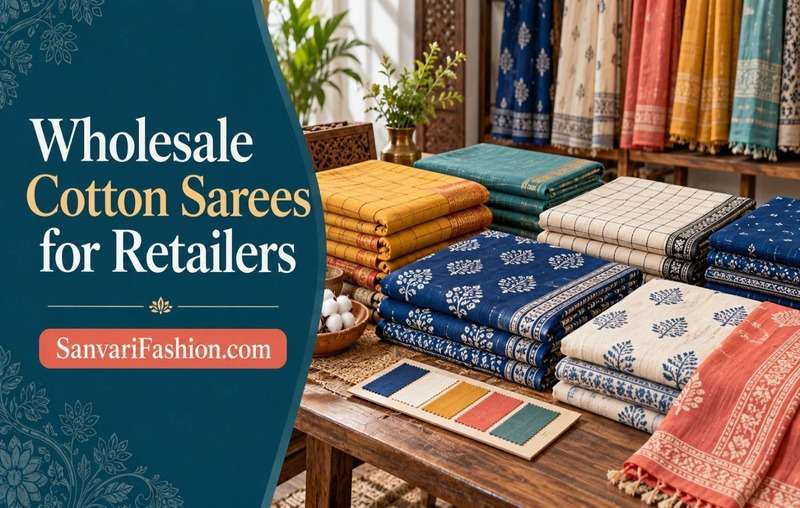
Cotton sarees are a dependable category for retailers because customers value comfort, versatility and everyday wearability. Unlike highly occasion-specific garments, a well-chosen cotton saree collection can appeal to office-goers, homemakers, teachers, travellers, festive shoppers and customers looking for thoughtful gifts.
However, buying wholesale cotton sarees for retailers is not only about choosing attractive prints. The right collection should match your local demand, price point, climate and sales channel. A practical buying approach reduces slow-moving stock and helps you create a repeat-customer category.
Cotton has an everyday appeal that works across many customer types. In warmer weather, breathable fabrics are especially appreciated. In cooler months, Wholesale cotton sarees can still be styled with blouses, jackets and layered accessories.
Retailers often choose cotton sarees because they offer:
Comfortable all-day wear
Easy styling for many age groups
A wide variety of prints and weaves
Multiple price segments
Strong repeat-purchase potential
Relevance for both casual and semi-festive use
The best collections make customers feel that they can wear the saree, not merely admire it.
Before ordering, think about who visits your shop or follows your online catalogue. Their lifestyle should shape your buying decisions.
For example:
Office-going customers may prefer lightweight fabrics, subtle borders and elegant prints.
Daily-wear customers may choose easy-wash styles and practical colours.
Mature buyers may value traditional motifs, calm shades and comfortable drapes.
Younger shoppers may respond to contemporary prints, checks and minimal designs.
Festival customers may want richer borders or handloom-inspired texture.
A retailer in a hot city may see stronger demand for soft, breathable cotton, while customers in another market may prefer slightly heavier textures and richer designs. Your collection should reflect real customer use, not only online trends.
Cotton sarees are not all the same. Understanding the main categories will help you explain products clearly and buy more confidently.
Printed cotton sarees are often ideal for everyday wear. Floral motifs, geometric patterns, block prints, stripes and abstract prints can offer broad appeal.
These are useful for customers who want easy styling and regular wear. Keep a mix of soft tones and brighter options, but avoid ordering too many very similar prints.
These sarees may feature woven-looking textures, traditional patterns, contrast borders or artisanal detailing. They can attract buyers looking for a more refined or culturally rooted look.
Explain the fabric and finish accurately. Do not use terms such as handloom unless the product genuinely qualifies for that description.
Cotton-silk blends can offer a slightly richer appearance while retaining some comfort. They may work well for office celebrations, poojas, family events and gifting.
Keep these in a separate price segment so customers understand the difference from regular cotton.
These designs are popular with shoppers who prefer a clean, contemporary look. They are especially useful for office wear and younger customers who want something understated.
Colour selection can strongly influence stock movement. A collection made entirely of bright shades or entirely of neutrals may limit your audience.
Build a balanced colour plan:
Everyday neutrals: beige, cream, grey, black, white and soft blue
Traditional favourites: maroon, red, mustard, green and navy
Fresh seasonal colours: peach, lavender, mint and powder blue
Practical darker shades: indigo, brown, bottle green and charcoal
Include both safe-selling colours and a few trend-led options. Your goal is not to predict every preference perfectly; it is to give buyers a useful choice without overstocking risky shades.
Online product images are important, but retailers should also pay attention to fabric feel and finishing. A saree may look good in a photo yet feel stiff, overly transparent or difficult to drape.
Before ordering in larger quantity, check:
Softness and breathability
Fabric thickness
Ease of drape
Border finishing
Print clarity
Colour consistency
Blouse piece details, if included
Whether the product requires special care
When you are sourcing from SanvariFashion.com, select a small test mix first if you are trying a new design family or price bracket. This gives you real customer feedback before you increase quantity.
Every customer does not have the same budget. A thoughtful retailer offers choices at more than one price level.
You may create:
Entry-level daily-wear cotton sarees
Mid-range printed and bordered cotton sarees
Premium cotton blends or detailed weaves
Festive cotton sarees with richer styling
Display the price clearly. Customers appreciate options, especially when they can see what changes between ranges: fabric quality, border work, print complexity or finishing.
Avoid keeping an entire collection only in the lowest price band. Very low margins can make it difficult to cover packaging, delivery, staff effort and promotions.
One common wholesale mistake is purchasing large quantities of an untested design. Instead, buy small but varied quantities initially.
Track which pieces receive:
The most customer enquiries
Quickest sales
Repeat demand
Positive feedback on comfort
Requests for additional colours
Then reorder winners. This method helps you grow a collection based on evidence rather than assumption.
Presentation affects perceived value. A neatly displayed wholesale cotton saree can look more premium than a crowded pile of mixed fabrics.
For offline shops:
Arrange by colour or price band.
Keep sample pieces easy to unfold.
Display a few styled drapes.
Use clean labels with fabric and price details.
For online sellers:
Use natural-light photos.
Show the pallu, border and fabric close-up.
Mention approximate length and blouse-piece information.
Record short videos to show the fall of the saree.
Honest presentation builds long-term trust and reduces return-related confusion.
Cotton sarees can be sold throughout the year, but your communication should change with the season.
Try simple campaigns around:
Summer comfort collections
Office-ready sarees
Monsoon-friendly darker prints
Festive cotton looks
Teacher’s Day or workwear edits
Everyday elegance collections
These themed edits give customers a reason to browse again without requiring a completely new inventory every time.
Which cotton sarees sell best for retailers?
The best-selling styles depend on your local customer, but printed cotton, lightweight daily-wear sarees, traditional motifs and practical colours are generally strong categories.
Should I stock cotton sarees in every colour?
No. Begin with a balanced mix of popular neutrals, traditional colours and a few seasonal shades. Track demand before increasing quantity.
How can I reduce slow-moving cotton saree stock?
Buy smaller quantities, test new designs, photograph products clearly and review sales data regularly before reordering.
Are cotton sarees suitable for online selling?
Yes. Clear fabric information, honest photos, short videos and responsive customer support are especially important for online sales.
A reliable cotton saree collection starts with customer understanding, careful fabric selection and smart stock planning. Explore wholesale options through SanvariFashion.com and build a collection that encourages customers to return for comfort, colour and everyday style.

