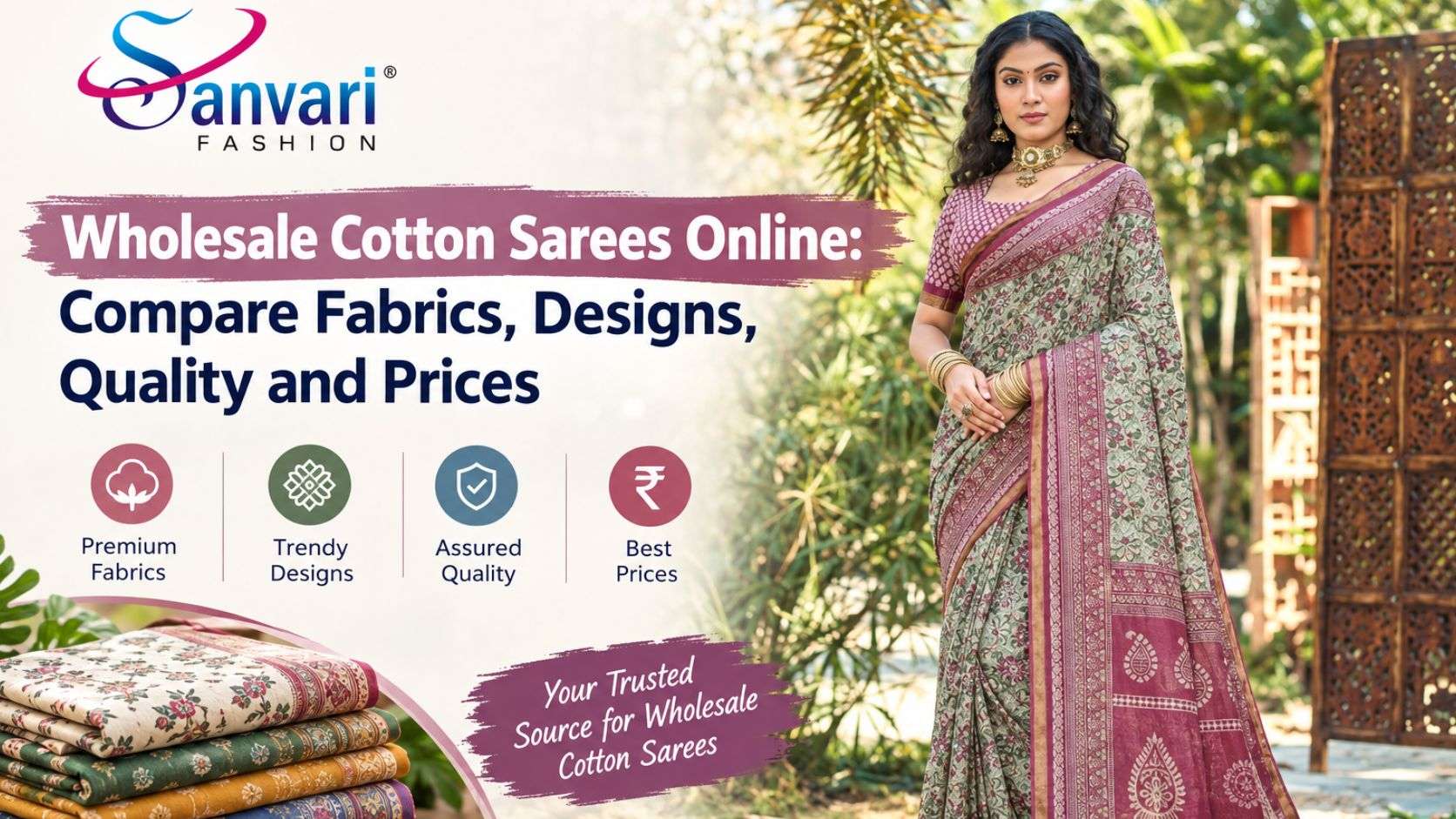
Cotton sarees remain an important category for retailers because they combine comfort, versatility, everyday appeal and a wide range of designs. For shop owners, boutique operators and online resellers, choosing the right collection is not only about finding a low purchase price. Fabric quality, weaving, prints, colours, finishing, blouse options, minimum order quantity and expected customer demand all influence the value of a wholesale purchase. When comparing wholesale cotton sarees online, buyers can review collections from different locations without spending time visiting several physical markets. SanvariFashion offers a broad cotton saree catalogue with options across cotton, khadi cotton, mal cotton, soft cotton, linen cotton and cotton-silk categories, giving retailers several fabric choices to consider.
Are cotton sarees suitable for daily retail collections? Yes, they can work well for customers looking for comfortable traditional wear. Can retailers compare fabrics before ordering? Yes, fabric information can help buyers select collections according to their customer base. Is cash on delivery available for every wholesale order? Payment and COD availability should be checked for the specific order and delivery location. Can resellers purchase in smaller wholesale quantities? Minimum order quantities vary by catalogue, so buyers should check the individual product before placing an order.
The growing demand for online sourcing has changed the way retailers purchase sarees. Instead of depending entirely on a local wholesale sarees market, retailers can browse product catalogues, compare designs and evaluate available quantities from their own shop or office. This is particularly useful for resellers who serve customers through social media, marketplaces or their own online stores.
A good online wholesale catalogue can provide different fabric choices and design styles in one place. On the SanvariFashion cotton saree collection, for example, buyers can find products featuring cotton, pure cotton, khadi cotton, mal cotton, linen cotton, cotton silk and other fabric combinations. Product listings also show different minimum quantities, which is useful when planning inventory according to available investment.
For retailers who prefer payment flexibility, wholesale cotton sarees online cash on delivery can be an important search requirement. However, COD availability may depend on the order value, delivery location, product conditions and seller policies. Buyers should always confirm the applicable payment option before finalising an order.
When considering COD, retailers should not focus only on payment convenience. They should also examine the fabric description, product photographs, quantity requirements, shipping information and return or damage policies. A lower-risk purchasing process is especially useful for new resellers who are testing a cotton saree collection for the first time.
Fabric is one of the most important factors when purchasing wholesale sarees. Different cotton varieties can create different textures, appearances and customer experiences. Pure cotton is commonly selected for breathable everyday styles, while khadi cotton can provide a more textured and traditional appearance. Cotton-silk blends can offer a slightly dressier look, making them suitable for customers who want traditional clothing with a more decorative finish.
Retailers should also consider the climate and customer preferences of their selling region. Lightweight cotton can be useful in warmer locations, while linen-cotton combinations can appeal to customers seeking a crisp and comfortable appearance. The product catalogue available on the supplied cotton saree page includes numerous fabric filters, making it easier to explore collections according to material.
The advantage of sourcing wholesale sarees online is the ability to compare several design directions before purchasing. Printed cotton sarees can be suitable for everyday customers, while handloom-inspired patterns, traditional motifs and textured fabrics can add variety to a retail collection.
Colour selection is equally important. Retailers should maintain a balance between evergreen shades and seasonal colours. Neutral, pastel and classic colours can provide everyday options, while brighter shades and distinctive prints can attract customers looking for statement pieces.
A retailer does not necessarily need hundreds of designs to create a strong catalogue. A carefully selected assortment with different fabrics, colour families and price points can provide better variety while keeping inventory manageable.
Wholesale sarees for resellers online are particularly useful for entrepreneurs who promote products through Instagram, WhatsApp, Facebook or other digital channels. Resellers can select designs, create product posts and present different collections to customers without maintaining a very large physical showroom.
For resellers, consistency is important. Before choosing a supplier, check whether product descriptions, photographs, fabric information, minimum quantities and pricing are clearly available. It is also useful to understand shipping timelines and policies for damaged or defective products.
Retailers expanding beyond sarees can also explore related apparel categories. For example, customers interested in comfortable ethnic clothing may also consider coordinated dress-material collections. This makes wholesale dress materials a useful complementary category when building a broader ethnic-wear catalogue.
Price comparison is essential, but the lowest listed price should not automatically determine the buying decision. Two sarees may have different prices because of differences in fabric, finishing, weaving, print quality, blouse material, design complexity or order quantity.
Retailers should calculate the complete purchase cost, including applicable shipping and other order-related expenses. They should then compare the expected selling price in their market. A slightly higher-cost saree may still be commercially useful if its design, fabric and finishing allow a suitable retail price.
The current cotton saree catalogue shows different products with different minimum order quantities and price points, demonstrating why retailers should compare individual products instead of assuming that every cotton saree has the same wholesale structure.
Before placing a bulk order, retailers should review several basic quality factors. First, confirm the fabric type and whether the description matches the product being offered. Second, examine photographs carefully for print clarity, colour combination, border finishing and overall presentation.
Third, check whether the saree is stitched or unstitched and whether a blouse piece is included when applicable. Fourth, review the minimum order quantity. The SanvariFashion catalogue currently includes products with different MOQs, ranging from smaller quantities to larger catalogue-based orders.
Finally, understand the seller's shipping and return policies. This helps reduce confusion when purchasing for resale.
Surat is widely associated with India's textile and apparel trade, making it an important sourcing location for retailers. Businesses searching for indian clothing stores in surat may be interested in comparing sarees, dress materials, kurtis and other ethnic categories in addition to cotton sarees.
For a retailer, purchasing from a supplier with a broad catalogue can make inventory planning easier. Instead of sourcing every category from a different vendor, businesses can investigate complementary products that match their existing customer base.
This is particularly helpful for stores that sell both traditional and contemporary fashion. Alongside sarees, retailers can consider modern apparel collections and seasonal products. The supplied Western Wear page provides another category that can complement an ethnic-focused inventory strategy.
A balanced collection should include products for different customer needs rather than concentrating on one style. Retailers can combine simple everyday cotton sarees with printed designs, textured fabrics, cotton-silk options and more distinctive patterns.
Price segmentation can also help. A budget-friendly range can attract price-conscious customers, while premium-looking fabrics and detailed designs can serve buyers with a higher spending preference.
For online resellers, product presentation matters as much as assortment. Use clear photographs, accurate fabric descriptions and straightforward information about availability. This can make it easier for customers to understand the product before ordering.
When you are ready to purchase, start by identifying the customer segment you want to serve. Then shortlist products according to fabric, design, colour, price and MOQ. Compare several products rather than selecting the first attractive catalogue.
Next, confirm current availability and payment options. If you are ordering for the first time, begin with a manageable quantity when the supplier's MOQ permits it. Track which designs receive the most customer interest and use that information to plan future purchases.
SanvariFashion's cotton saree catalogue includes multiple fabric categories and wholesale products with different minimum quantities, giving retailers an opportunity to build collections according to their inventory requirements.
For retailers and resellers, wholesale cotton sarees online can simplify product discovery and inventory planning. The key is to look beyond price and compare fabric, design, quality, MOQ, shipping and customer demand together.
A thoughtful sourcing strategy can help retailers maintain variety without unnecessarily overstocking. Whether you operate a physical clothing store, boutique, social-media shop or online resale business, cotton sarees can form a practical part of an ethnic-wear collection.
When expanding your product range, combining sarees with related categories such as dress materials and contemporary clothing can also help create a more complete fashion catalogue.
If you are looking for reliable options for your next saree collection, explore the available wholesale cotton sarees online and compare fabrics, designs, prices and minimum order quantities before purchasing. SanvariFashion provides a range of cotton saree collections for retailers and resellers, with product options across multiple fabric types and designs.
Choose the styles that match your customers, review the product details and build your next inventory with a practical wholesale buying strategy. Explore the collection today and contact the supplier to check availability, payment options and ordering requirements for your business.

