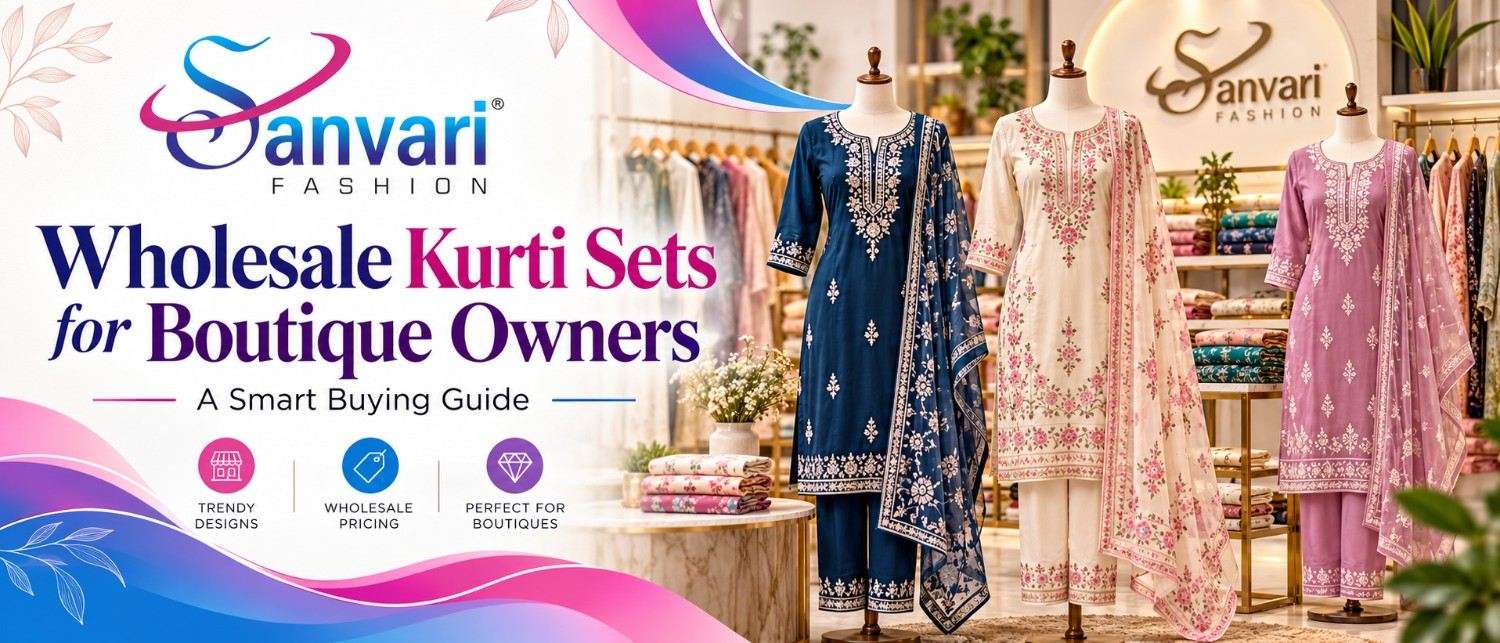
For many boutique owners, kurti sets are one of the most reliable women’s wear categories. A coordinated kurti, bottom and sometimes dupatta gives customers a ready-to-wear outfit without the effort of matching separate pieces. This makes wholesale kurti sets for boutique owners a practical category for both offline stores and online sellers.
A well-chosen kurti set collection can help increase average order value, improve customer satisfaction and create repeat demand. But success depends on more than selecting attractive designs. Boutique owners need to understand fabrics, fit, price points, seasonal demand and their local customer preferences.
This guide explains how to source kurti sets in wholesale quantities with a better business approach.
Customers often prefer complete outfits because they save time. A kurti set creates a coordinated look, which makes it useful for office wear, casual outings, family functions, travel and festive occasions.
For a boutique, kurti sets offer several benefits:
Higher billing value than a single kurti
Better visual display on mannequins and social media
Easy styling for customers
Multiple price points for different buyers
Suitable for casual and festive collections
Repeat purchase potential across seasons
A customer who is unsure about matching a kurti with leggings, pants or a dupatta may be more likely to buy a ready set.
Not every kurti set serves the same customer. Your collection should include options for different budgets and usage occasions.
Kurti and pant sets are useful for everyday fashion. They are suitable for office wear, casual outings and regular family wear. Straight kurtis with ankle-length pants are popular because they look neat and are easy to style.
This category can work well for customers who want comfort with a polished appearance.
Palazzo sets offer a relaxed and fashionable look. They may suit customers who prefer loose-fitting bottoms or flowy silhouettes. Rayon, muslin and soft blended fabrics are commonly used in this category.
These sets can look attractive in catalogue images and social media videos because of their movement and drape.
Three-piece sets often create a premium impression. They are useful for festive occasions, family gatherings and customers who want a complete ethnic outfit.
A matching dupatta can increase the perceived value of the set. However, boutique owners should ensure the fabric and finishing justify the selling price.
Flared kurti sets can appeal to customers who enjoy festive or elegant styling. They may include umbrella cuts, Anarkali shapes, printed dupattas or decorative neck patterns.
Because these styles can be more fashion-sensitive, buy them in a controlled quantity first and repeat only when customer response is strong.
Fabric affects comfort, appearance, wash care and customer satisfaction. Before purchasing wholesale kurti sets, ask suppliers for clear fabric information.
Cotton sets are suitable for customers who prioritise comfort and breathable clothing. They can work especially well for warm weather, office wear and daily wear.
Rayon has a soft fall and can make prints and silhouettes look attractive. It is common in trendy kurti sets and can suit both daily and semi-festive collections.
Muslin has gained popularity for its soft texture and premium feel. It can work well for boutique customers who are ready to pay more for fabric appearance and comfort.
Roman silk and similar fabrics can create a richer look for festive sets. These styles may include embroidery, foil work or decorative patterns. They should be positioned as occasion wear rather than basic daily wear.
A boutique should not keep every kurti set at the same price point. Customers have different budgets, so a balanced collection helps you serve more buyers.
A practical mix can include:
Entry-level daily-wear sets
Mid-range fashionable kurti sets
Premium festive or embroidered sets
Selected plus-size options
Seasonal collections for festivals and wedding functions
Your pricing should cover product cost, shipping, packing, local delivery, staff cost, marketplace charges if applicable and your desired profit margin.
Do not decide selling price only by looking at competitor prices online. A business becomes sustainable when it understands its own actual cost structure.
Size-related complaints can affect a boutique’s reputation. Before purchasing, confirm the available size range and ask for a size chart.
Common mistakes include assuming that every medium size fits the same way or failing to mention the garment’s actual measurements to customers.
For better customer service:
Keep a visible size chart
Mention whether the fit is regular, slim or loose
Offer multiple sizes where possible
Stock plus-size styles separately
Ask customers about their preferred fit before recommending a product
A satisfied customer is more likely to return for another colour or design.
New boutique owners should avoid buying too many pieces from a single design. Start with a tested mix of fabrics, colours and styles. Track which products receive enquiries, trial-room interest, WhatsApp replies and actual orders.
A practical starting approach is:
Buy more daily-wear and mid-range styles
Keep limited premium festive stock
Test new designs in small quantities
Repeat proven collections
Replace slow-moving stock with fresh styles carefully
The goal is not to have the largest collection. The goal is to maintain a collection that sells.
Good catalogue images and videos can help boutiques sell kurti sets through WhatsApp, Instagram, Facebook and online stores. When posting products, include clear details such as:
Fabric
Set contents
Available sizes
Colour options
Price
Delivery timeline
Care instructions
Avoid posting only a product image with no information. Clear product descriptions reduce unnecessary customer questions and improve trust.
You can also create simple categories in your WhatsApp catalogue, such as “Office Wear Kurti Sets,” “Festive Kurti Sets,” “Under Budget Sets” and “Premium Boutique Collection.”
Fashion demand changes with weather and festivals. Cotton and breathable sets may perform well during warmer months, while richer fabrics and festive colours can gain attention around celebrations and wedding periods.
Plan your buying in advance, but do not overstock only because a festival is coming. Start with limited quantities and increase orders based on customer interest.
Colours, prints and silhouettes should also be selected according to your audience. Some markets prefer bright traditional colours, while others respond better to pastel, minimal or neutral designs.
Which kurti sets are best for a new boutique?
Start with a mix of daily-wear kurti pant sets, rayon sets and a limited number of premium festive designs.
Are three-piece kurti sets more profitable?
They can have a higher selling price because they offer a complete outfit. Profit depends on your sourcing cost, quality and customer segment.
Which fabric is best for daily-wear kurti sets?
Cotton and rayon are commonly preferred for daily wear because they can be comfortable and easy to style.
How can I avoid unsold kurti set stock?
Purchase in smaller quantities first, track customer demand and repeat only the fabrics, sizes and styles that sell consistently.
Should boutiques keep plus-size kurti sets?
Yes. Plus-size styles can help a boutique serve more customers and build loyalty in an often underserved segment.
Build your boutique’s kurti set collection with a clear plan: practical daily wear, fashionable mid-range styles and selected festive pieces. The right balance of fabric, fit and pricing can turn kurti sets into a reliable repeat-sales category.

