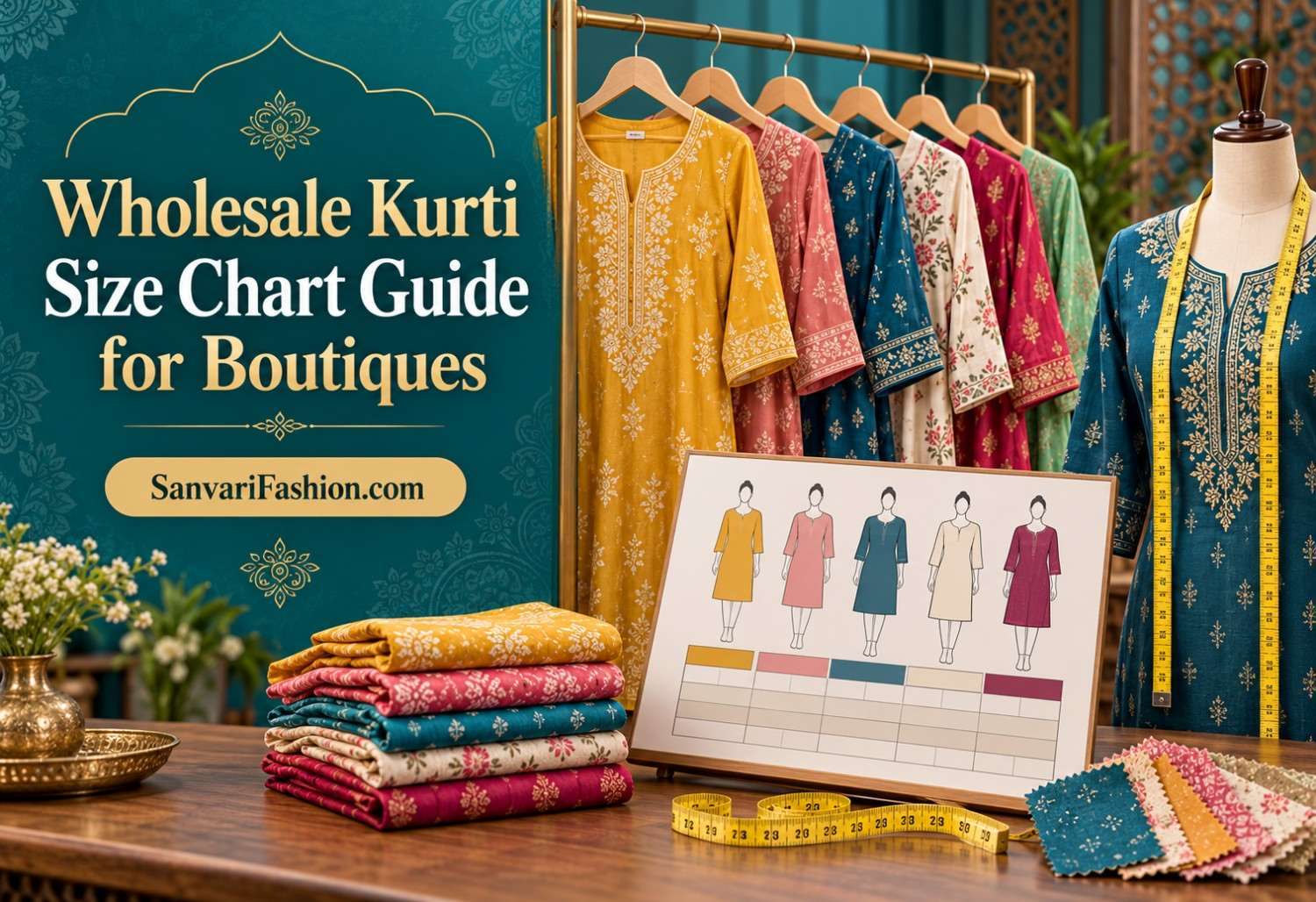
A clear size chart can turn a customer enquiry into a confident order. For boutique owners, size information is not a small product detail—it directly affects conversions, exchanges, repeat purchases and customer trust.
A customer may like a kurti’s print, fabric and price, but hesitate if she cannot understand whether it will fit. This becomes even more important in WhatsApp, Instagram and website selling, where customers cannot try on the garment before buying.
This guide explains how boutique buyers can use wholesale kurti size charts more effectively and plan stock with fewer avoidable size issues.
Labels such as M, L, XL and XXL are useful, but they are not universal. One supplier’s XL may fit differently from another supplier’s XL.
For this reason, every product listing should include actual garment measurements.
Useful measurements include:
Actual measurements help customers compare the kurti with clothing they already own.
A body measurement is the customer’s personal measurement. A garment measurement is the finished kurti’s measurement.
A customer usually needs some ease in the garment for comfort and movement. This is why a product description should clearly state whether the size chart shows body measurement or garment measurement.
For example, a fitted kurti and a relaxed-fit kurti may have different chest measurements even when both use the same size label.
Do not assume customers understand this difference. A short note in the product description can prevent confusion.
Use the same chart structure across your catalogue whenever possible.
A simple format can include:
| Size | Chest | Waist | Hip | Kurti Length | Sleeve Length |
|---|---|---|---|---|---|
| M | Actual garment measurement | Actual garment measurement | If relevant | Actual length | Actual length |
| L | Actual garment measurement | Actual garment measurement | If relevant | Actual length | Actual length |
| XL | Actual garment measurement | Actual garment measurement | If relevant | Actual length | Actual length |
| XXL | Actual garment measurement | Actual garment measurement | If relevant | Actual length | Actual length |
Do not fill a chart with guessed numbers. Use supplier-confirmed measurements or measure a sample garment yourself.
A size mix should be based on your own sales data, not only on supplier availability.
Track:
A straight-cut office kurti may sell differently from an A-line printed kurti. A festive kurti set may have another demand pattern. Avoid ordering the same quantity in every size for every design.
Boutique owners sourcing through SanvariFashion.com can compare available size ranges and full product information before placing a wholesale order.
Size charts should always be supported by fabric and fit details.
Cotton, silk blends and many woven fabrics may have little or no stretch. Customers need accurate measurements and enough ease.
Some blends may include stretch. Mention it clearly, but do not overstate flexibility.
Straight kurtis usually fit closer to the body and need careful chest, waist and hip details.
A-line kurtis offer more room toward the hem and may feel more forgiving around the hip area.
These styles should still include measurements. “Oversized” does not mean every size will fit every customer.
For kurti sets, the bottom wear can create more size-related problems than the kurti itself.
Always mention:
A customer may fit comfortably into the kurti but find the pant tight or loose. Complete details reduce exchanges and follow-up questions.
A size chart is more effective when customers can see the garment clearly.
Show:
Use a clear, readable chart image for WhatsApp and social media. Avoid placing tiny text over a busy product photo.
Add one simple instruction to your product listings:
“Compare the garment chest measurement with a comfortable kurti you already own.”
This is often easier for customers than measuring themselves for the first time. It also gives them a practical way to understand fit.
For fitted designs, encourage customers to choose a comfortable ease rather than selecting the smallest possible size.
Create a ready reply for common size questions.
For example:
“Please compare the chart with a comfortable kurti you already have. This design has a straight fit and the fabric has limited stretch. We can share a fabric video if needed.”
A helpful answer builds trust and reduces rushed orders.
Every order and exchange provides useful information.
Track:
Over time, you can identify patterns and improve the size mix for future buying.
Avoid:
What should a wholesale kurti size chart include?
It should include actual chest, waist, hip where relevant, kurti length, sleeve length, fit type and fabric stretch information.
Should I mention body size or garment size?
Clearly mention which measurement type is being shown. Garment measurements are often easier for customers to compare with existing clothing.
How can boutiques reduce kurti size exchanges?
Use accurate measurements, explain the fit, mention fabric stretch and provide clear product images and videos.
Why do the same size labels fit differently across suppliers?
Suppliers may use different measurement standards, fabrics, cuts and ease allowances. Actual measurements are more reliable than labels.
Should kurti sets have separate bottom-size details?
Yes. Include waist, hip, length, stretch and waistband type for the bottom wear.
A transparent size chart helps customers order with more confidence and helps boutiques reduce avoidable exchanges. Explore wholesale kurti options at SanvariFashion.com and choose collections with clear size details for better selling.

