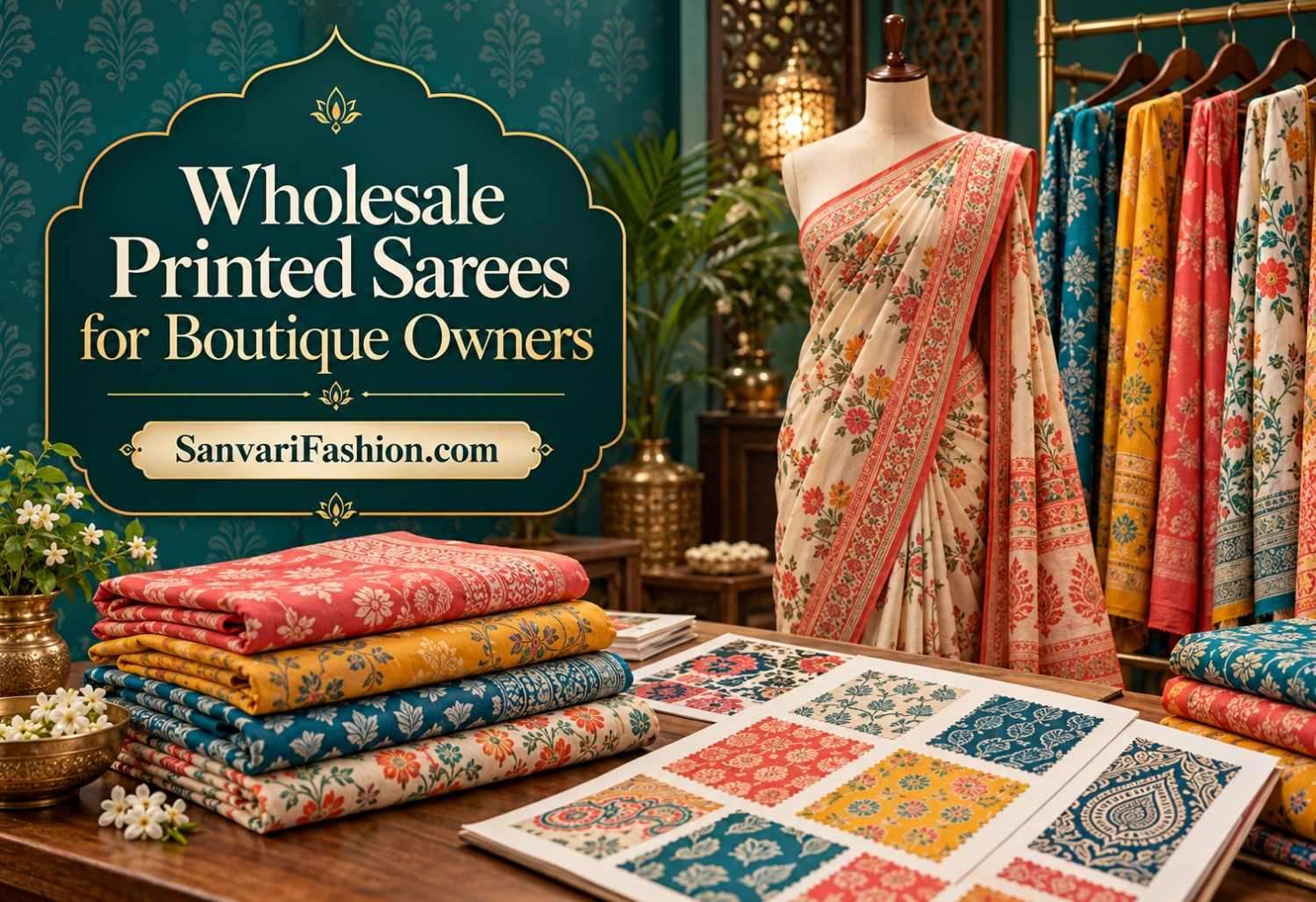
Printed sarees can be a practical and versatile category for boutique owners. They can suit daily wear, office wear, casual outings, festive dressing and budget-conscious customers, depending on fabric, print style and finishing. A well-planned printed saree collection gives customers more choice while allowing sellers to offer multiple price points.
The challenge is that not every attractive print converts into sales. Some designs may look appealing in a catalogue but feel too bold, too repetitive or difficult to style once received. Successful buying requires attention to the customer’s taste, fabric feel, colour balance, print scale and your own selling channel.
This guide explains how boutique owners can select wholesale printed sarees with better planning and less guesswork.
Start with the kind of saree buyer who already visits your boutique or messages you online.
Your customers may include:
A boutique serving office-wear customers may need refined florals, small motifs and easy fabrics. A boutique that sells festive collections may choose richer prints, borders and more colourful combinations. Do not buy every available print type equally; choose based on the needs of your market.
The size of a print has a major impact on how a saree looks when draped.
Small florals, butis, dots and repeated motifs can feel elegant and easy to wear. They are useful for customers who prefer understated sarees, office-friendly styles and regular-use clothing.
Medium-scale prints often give a saree enough visual interest without making it feel overly busy. They can be suitable for casual gatherings, daytime functions and versatile boutique collections.
Large florals, bold abstract patterns and big motifs can create a stronger fashion statement. They can work well when the fabric, border and colour combination are balanced. Keep quantities lower until you know whether your buyers prefer bold designs.
A mix of small, medium and selected large prints helps your catalogue feel varied.
The print is important, but the fabric decides how the saree drapes, feels and performs for the customer.
Cotton and cotton-blend printed sarees can be good for daily wear, office use and warm-weather dressing. Look for comfortable texture, suitable thickness and clear print quality.
Lightweight flowing fabrics can suit party wear, casual gatherings and customers who want a softer drape. Check transparency, finishing and whether the print remains clear after draping.
Printed silk-blend sarees can create a dressier appearance without needing heavy embellishment. They may suit festive wear, gifting and family functions when paired with a coordinated blouse suggestion.
These fabrics may offer easy drape and lower-maintenance appeal. Always share accurate fabric information so customers know what to expect before placing an order.
At SanvariFashion.com, boutique buyers can build stronger printed-saree collections by comparing fabric details with their intended customer segment.
Colour planning prevents your collection from looking repetitive. Instead of choosing only one trend-like colour family, build a mix customers can browse easily.
Include:
Make sure each colour has a purpose. Softer shades can suit workwear and daytime looks, while richer colours can support festive and occasion-based selling.
A print alone does not make a saree feel complete. Borders and pallus can determine whether the item looks simple, formal, traditional or premium.
Check:
A subtle printed saree with a well-designed border may look more polished than a busy saree with competing colours. Ask for a full drape image or video whenever possible.
Printed sarees can serve multiple budgets. Build a collection with clear levels.
You may include:
Calculate your final selling price using full landed cost, including product cost, transport, packaging, payment charges, content creation and your desired margin. Do not set a price only by copying a competitor.
A clear price ladder helps customers upgrade when they see more value in a higher-quality fabric or finish.
Online customers need enough information to imagine the saree in real life. A strong listing should include:
Show the saree on a model, mannequin or neat drape where possible. Folded-only images make it harder for customers to understand the fall and print placement.
New prints should be tested in limited quantities. Record actual responses instead of relying on assumptions.
Track:
This data will help you identify whether florals, abstract prints, traditional motifs or minimal patterns work best for your audience.
Avoid:
Which printed sarees are best for boutique owners?
A balanced mix of cotton, lightweight drape fabrics, small prints, medium florals and selected festive styles can serve different buyer needs.
Are printed sarees suitable for office wear?
Yes. Small motifs, subtle florals, neutral colours and comfortable fabrics can work well for office-ready saree collections.
How do I choose the right print size?
Use small prints for understated and versatile styles, medium prints for broad appeal and selected large prints for customers who prefer bolder fashion.
Should I keep printed sarees in multiple price ranges?
Yes. Price bands help you serve budget buyers while also offering better-finish pieces to customers seeking a premium option.
How can I sell more printed sarees online?
Use clear drape photos, fabric close-ups, a product video, border details and easy blouse suggestions so customers can visualise the complete look.
A profitable printed-saree collection combines wearable fabrics, thoughtful colour selection and designs your customers can picture themselves wearing. Explore wholesale printed saree options through SanvariFashion.com and create a better assortment for your boutique.

